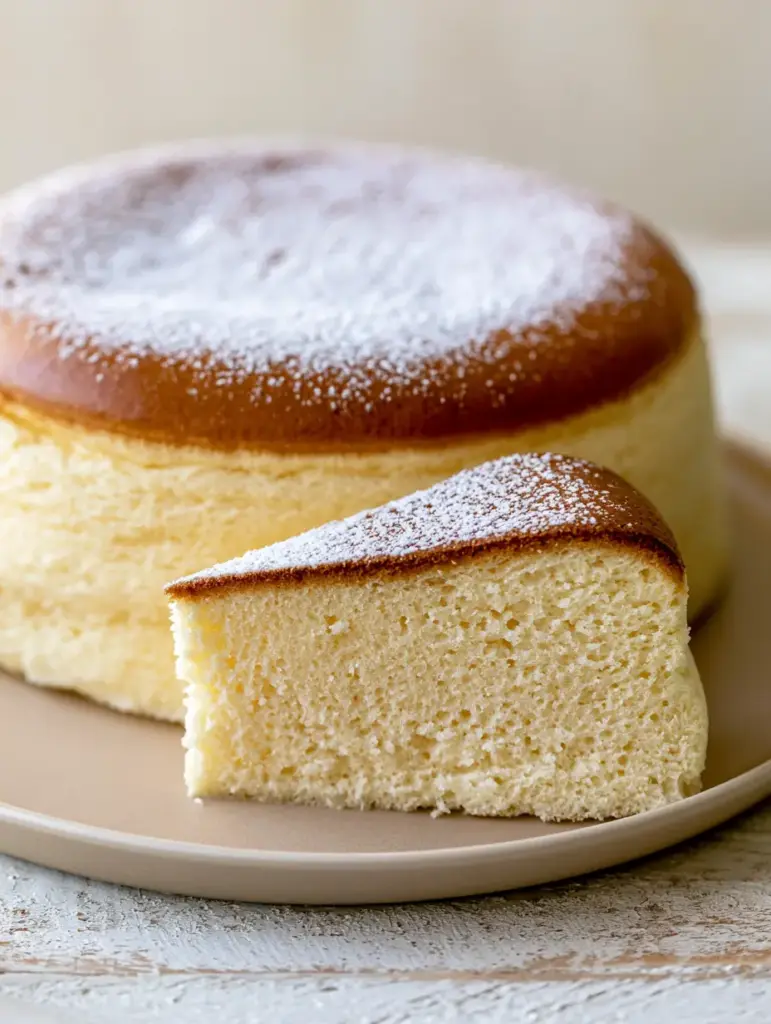
Japanese cotton cheesecake is the crown jewel of the dessert world, combining the rich decadence of a traditional cheesecake with the ethereal, cloud-like texture of a French souffle. This recipe focuses on achieving that iconic golden-brown domed cake top and a flawless crack-free surface that has taken social media by storm. If you have been searching for the perfect “jiggle cake” that melts in your mouth, you have arrived at the right place.
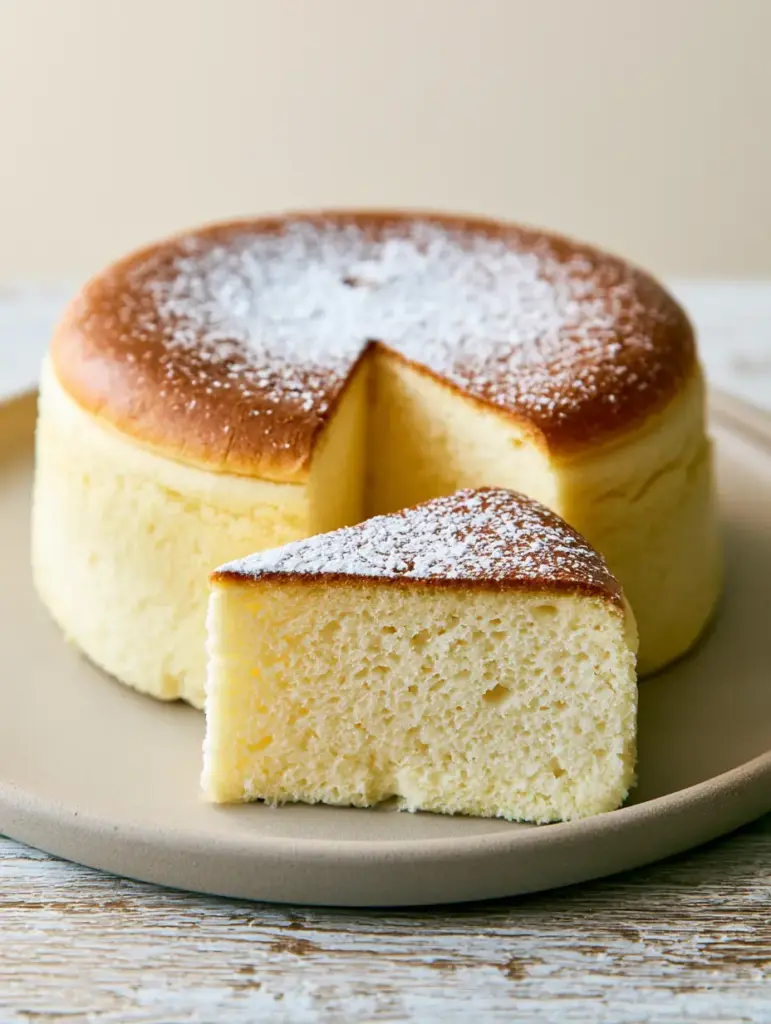
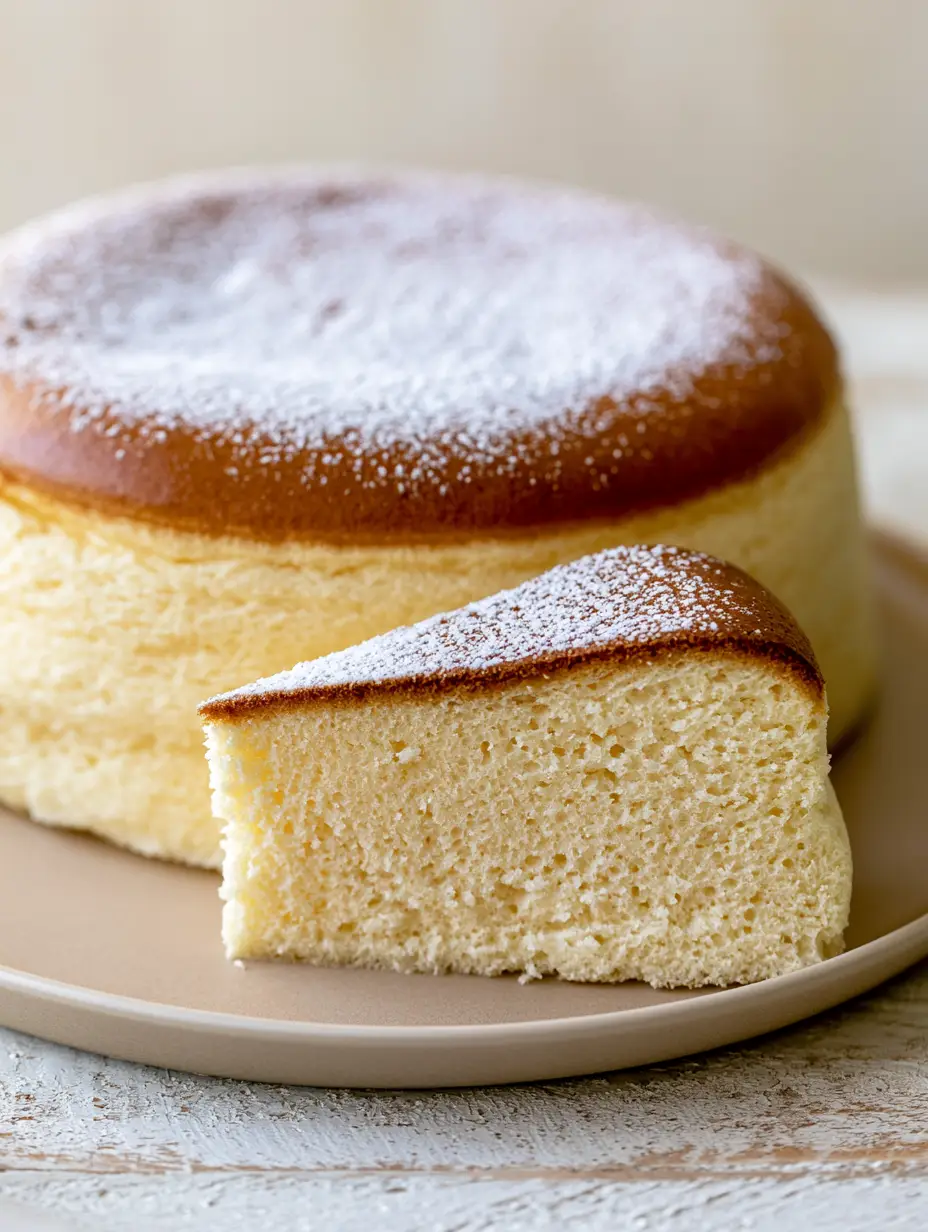
The magic of a Japanese cotton cheesecake lies in the delicate balance of a cooked flour-and-cheese base folded into a meticulously whipped meringue. Unlike its dense New York-style cousins, like my decadent Oreo cheesecake, this version is light, airy, and only moderately sweet. The result is a pristine, ultra-fluffy sponge with tiny micro-bubbles that practically hiss when you slice into it.
Why This Is The Only Souffle Cheesecake Recipe You Need
- Unmatched Texture: We achieve an airy yellow souffle interior sponge that is impossibly light yet moist.
- Visual Perfection: Follow our precise cooling method to ensure a perfectly smooth, unblemished top dome every single time.
- Scientific Precision: This recipe uses dual-unit formatting to ensure success whether you use a scale or measuring cups.
- Minimalist Elegance: With a light dusting of white powdered sugar, this cake looks like it belongs in a high-end Tokyo boutique bakery.
The Science Behind the Ingredients
Success starts with understanding your components. For a Japanese cotton cheesecake, temperature and fat content are everything.
Cream Cheese (250g / 9oz): Use full-fat blocks only. This provides the structural backbone and the tangy flavor profile necessary for the airy yellow souffle interior.
Unsalted Butter (50g / 3.5 tbsp): Adds richness and helps create a tender crumb that dissolves on the tongue.
Whole Milk (100ml / 0.4 cup): Acts as the liquid base to thin the cream cheese into a smooth, lump-free slurry.
Large Eggs (6 pieces): Separated into yolks and whites. The yolks provide color and richness, while the whites are the leavening agent for the domed cake top.
Cake Flour (60g / 0.5 cup): Low protein content is vital. If you only have all-purpose, you must sift it with cornstarch to prevent a tough texture.
Cornstarch (20g / 2.5 tbsp): Also known as corn flour, this stabilizes the meringue and contributes to the flawless, airy, sponge-like inner crumb.
Granulated Sugar (140g / 0.7 cup): Divided use. Sugar not only sweetens but stabilizes the egg white foam, preventing the cake from collapsing.
Lemon Juice (1 tsp): The acid helps the egg whites reach their full volume and maintain their structure during the bake.
Step-by-Step Instructions for the Perfect Jiggle
Creating the Silky Cheese Base
Begin by creating a bain-marie (water bath). Place your cream cheese, butter, and milk in a heat-proof bowl over simmering water. Whisk constantly until the mixture is completely smooth and free of lumps. Remove from heat and let it cool slightly; this ensures you don’t scramble the yolks in the next step.
Whisk in your 6 egg yolks one by one. The batter should transform into a vibrant, pale yellow. Sift in your cake flour and cornstarch. Do not skip sifting. You want to incorporate as much air as possible while ensuring a minimalist, refined texture.
Mastering the Meringue
In a separate, ultra-clean bowl, begin whisking the egg whites and lemon juice. Once frothy, add the sugar in three stages. Whisk until you reach soft peaks. If you whisk until stiff peaks (like a traditional birthday cake cheesecake), the cake will likely crack in the oven.
The meringue should be glossy and hold a gentle curve when you lift the whisk. This is the secret to the flawless crack-free surface and that iconic golden-brown dome.
The Gentle Fold
Take one-third of the meringue and fold it into the cheese batter to lighten it. Then, pour the cheese mixture back into the remaining meringue. Use a wide spatula and a gentle “cut and fold” motion. Stop the moment the color is uniform; over-mixing will deflate the micro-bubbles and lead to a flat cake.
Baking for the Golden Dome
Prepare an 8-inch (20cm) round cake pan with high parchment paper walls. Wrap the outside in foil to prevent water leakage. Pour the batter in and tap the pan on the counter once to remove large air pockets. Place the pan in a larger roasting tray filled with 1 inch (2.5cm) of hot water.
Bake at 320°F (160°C) for 20 minutes, then reduce to 285°F (140°C) for another 40-50 minutes. The Japanese cotton cheesecake is done when the top is a perfectly smooth, unblemished, golden-brown and the center has a slight jiggle.
Expert Tips for a Crack-Free Success
- Steam Control: The water bath is non-negotiable. The steam keeps the surface moist, preventing it from drying and splitting.
- The Oven Door Trick: When the timer goes off, do not remove the cake! Crack the oven door 1 inch and let it cool inside for 15-20 minutes. Sudden temperature drops cause shrinkage.
- Room Temp Ingredients: Ensure your eggs are at room temperature to achieve the best volume in your meringue.
- Parchment Height: Make sure your parchment paper extends at least 2 inches above the rim of the pan to support the domed cake top as it rises.
Storage, Reheating & Freezing
This cake is best served slightly chilled or at room temperature. Store leftovers in an airtight container in the refrigerator for up to 3 days. The texture will become slightly denser, similar to my cheesecake cupcakes, but it remains delicious.
I do not recommend freezing this cake, as the delicate airy yellow souffle interior can become grainy once thawed. For the best experience, enjoy it within 24 hours of baking.
What to Serve With Japanese Cotton Cheesecake
To highlight the minimalist matte beige ceramic plate and the cake’s subtle sweetness, serve with a side of fresh berries or a light dollop of whipped cream. If you are hosting a summer party, this pairs beautifully with a refreshing passion fruit margarita punch or a chilled strawberry shortcake trifle for a dessert spread.
Frequently Asked Questions
Yes, but you must replace 2 tablespoons of the all-purpose flour with cornstarch for every cup to mimic the low-protein structure of cake flour, ensuring an airy crumb.
The ‘jiggle’ comes from the high moisture content and the airy structure of the meringue. Proper folding and the water bath baking method are essential to maintain this texture.
Sudden temperature changes cause the air bubbles to collapse. Always let the cake cool slowly inside the oven with the door slightly ajar for at least 15-20 minutes.
Cracks are usually caused by an oven temperature that is too high or whipping the egg whites to stiff peaks. Ensure you whip to soft peaks and use a consistent water bath.
The Ultimate Japanese Cotton Cheesecake Recipe Card
Japanese Cotton Cheesecake: The Ultimate Ultra-Fluffy Souffle Guide
Ingredients
Equipment
Method
- Melt cream cheese, butter, and milk in a double boiler until smooth.
- Whisk in egg yolks, then sift in cake flour and cornstarch until a pale yellow batter forms.
- Whisk egg whites and lemon juice, gradually adding sugar until soft, glossy peaks form.
- Gently fold meringue into the cheese base and pour into a lined 8-inch pan.
- Bake in a water bath at 320°F (160°C) for 20 mins, then 285°F (140°C) for 50 mins.
Notes
Cool the cake inside the oven with the door cracked to prevent sudden deflation.
Join the Karen Cooks Community!
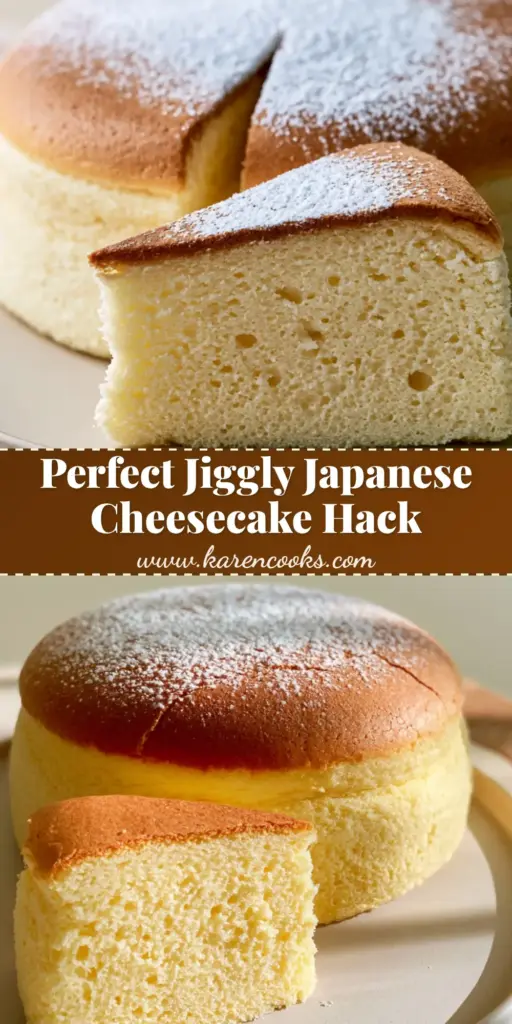
Did you achieve that flawless, airy, sponge-like inner crumb? I want to see your results! Save this recipe to your Pinterest dessert boards so you never lose it. Follow @karen_cooks_official for more foolproof baking guides. Please leave a 5-star rating in the comments below and upload a photo of your golden-brown domed cake top—it helps other home cooks find success!