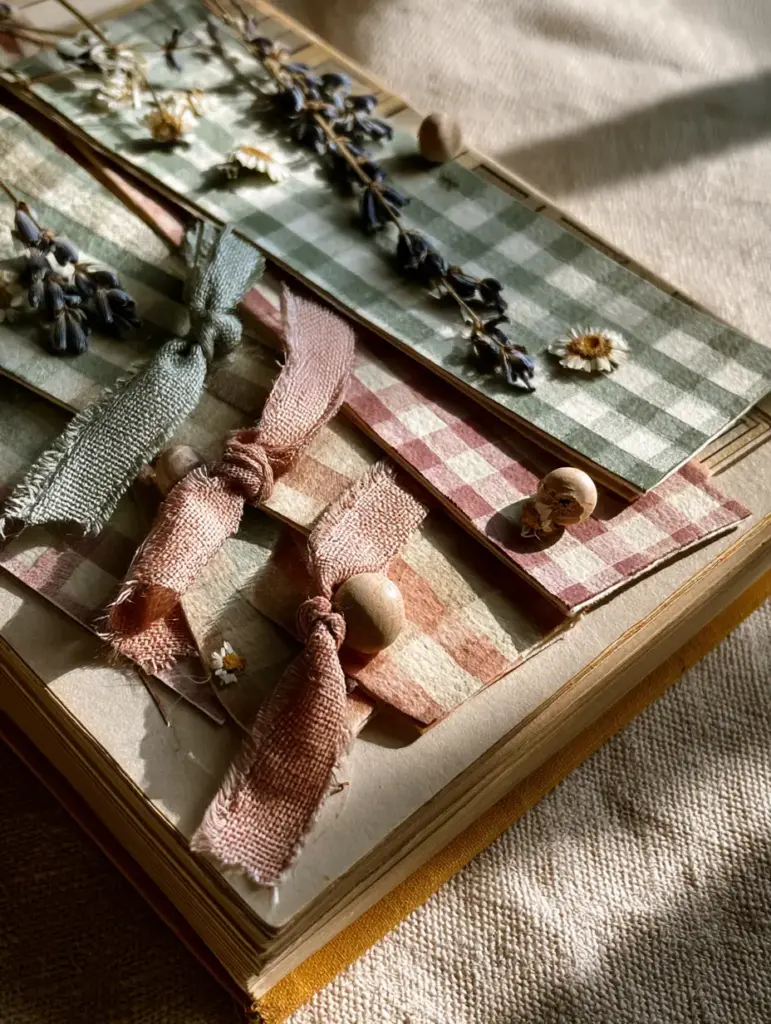
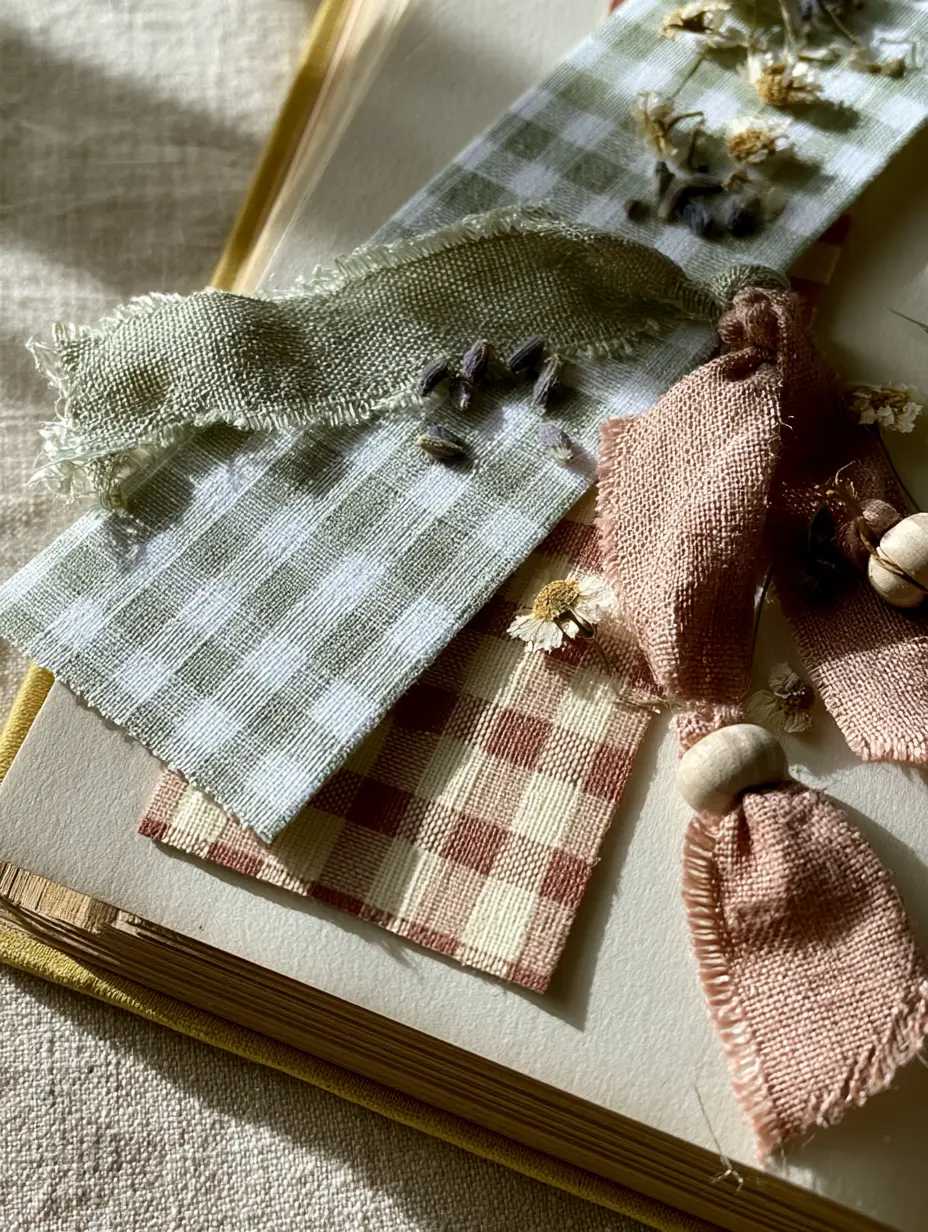
There is a profound, tactile joy in turning the pages of an antique hardcover book, especially when the experience is elevated by handcrafted gingham bookmarks. Imagine the soft morning sunlight streaming through a window, casting gentle shadows across a neutral beige linen background while you mark your place with a textured, sage green masterpiece. These aren’t just placeholders; they are small, sensory-rich canvases that combine the rustic charm of checkered patterns with the delicate elegance of pressed white daisies and raw wooden beads.
Creating these bookmarks requires a blend of precision and organic artistry. By layering heavy-weight watercolor paper with frayed linen and hand-knotted silk, you create a piece that feels as substantial as the literature it protects. In this guide, we will treat the assembly of these gingham bookmarks like a fine recipe, focusing on the visual textures and structural integrity that make a handmade item truly heirloom-quality.
Why These Handcrafted Gingham Bookmarks Are a Reader’s Essential
- Tactile Sophistication: The marriage of heavy-weight gingham cardstock and a matte finish texture provides a premium, non-slip feel in your hand.
- Botanical Elegance: Each bookmark is “garnished” with real pressed dried daisies and scattered lavender buds, bringing a touch of the meadow to your library.
- Artisanal Construction: With frayed linen ribbon tassels and raw wooden beads, these bookmarks offer a rustic, handheld smartphone photo aesthetic that is perfectly “undone.”
- Versatile Gifting: Much like a beautifully prepared einschulungskuchen, these bookmarks serve as thoughtful, personalized gifts for students and bibliophiles alike.
The Elements of Style: Ingredients for Your Botanical Bookmarks
To achieve the professional, matte look seen in our visual blueprint, you must start with high-quality components. Every “ingredient” serves a specific purpose in building the bookmark’s structural and visual layers.
Heavy-Weight Gingham Cardstock: You will need 3 sheets of 110lb (300gsm) cardstock in sage green, dusty rose, and cream patterns. This serves as the sturdy base, ensuring the bookmark doesn’t curl over time.
Frayed Linen Ribbon: Prepare 12 inches (30cm) of 1-inch (2.5cm) wide linen ribbon. The linen provides a soft, organic contrast to the crisp lines of the gingham print.
Hand-Knotted Silk Tassels: Use 2 yards (1.8m) of fine silk thread to create three tassels. Silk offers a subtle sheen that catches the morning light differently than the matte paper.
Pressed Dried Daisies: Select 6-9 tiny white daisies that have been fully dehydrated. These act as the primary visual garnish, providing a pop of bright, natural white against the colored patterns.
Scattered Lavender Buds: You will need 1 tsp (5g) of dried culinary-grade lavender. These are used for both visual texture and a lingering, calming scent every time you open your book.
Vintage Book Pages: Use 2-3 pages from a yellowed, antique book. These will be used for subtle decoupaging or as a textural backing for your gingham bookmarks.
Raw Wooden Beads: Gather 6 small (8mm) unfinished wooden beads. These add a grounding, earthy element to the silk tassels and linen ribbon.
Matte Finish Sealant: A professional-grade, non-yellowing matte spray or brush-on sealant is essential. This protects the delicate daisies and buds while maintaining that sought-after non-reflective texture.
Essential Artisanal Tools for Success
Achieving a macro-sharp focus on your craft requires the right equipment. Just as you wouldn’t bake bakery-style muffins without the proper tin, you shouldn’t craft these without precision tools.
- Precision Paper Trimmer: To ensure the gingham print is cut perfectly square and crisp.
- Bone Folder: Used to burnish the edges and ensure the cardstock layers are perfectly bonded.
- Fine-Tipped Tweezers: Crucial for placing scattered lavender buds and delicate daisy petals without crushing them.
- Acid-Free Craft Adhesive: A high-quality glue that won’t yellow or warp the vintage book pages over time.
- Small Awl or Punch: To create the clean hole for your frayed linen ribbon.
Step-by-Step Instructions: Crafting the Gingham Bookmarks
Phase 1: Preparing the Gingham Base
Start by measuring and cutting your heavy-weight gingham cardstock into 2×7 inch (5x18cm) strips. Ensure your cuts follow the grid of the gingham pattern to maintain visual symmetry. If you are using vintage book pages as a backing, cut them slightly smaller—by about 1/8 inch (3mm)—to create a framed effect.
Apply a thin, even layer of acid-free adhesive to the back of the cardstock. Press it firmly onto the vintage paper, using a bone folder to smooth out any air bubbles. The result should be a stiff, heavy-weight strip that feels substantial and premium.
Phase 2: Fraying and Tassel Assembly
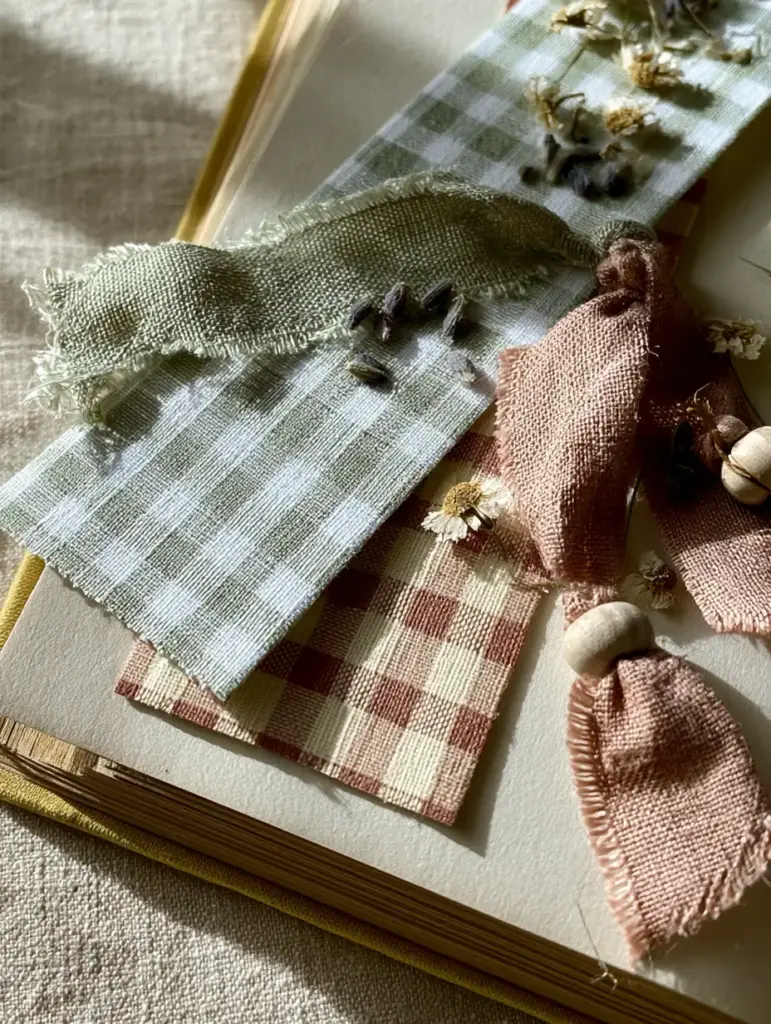
Cut your linen ribbon into 4-inch (10cm) lengths. To achieve the “slightly frayed” look from the prompt, use a needle to gently pull 3-4 longitudinal threads from each side of the ribbon. This creates a soft, feathered edge that feels wonderful to the touch.
Thread two raw wooden beads onto your silk thread before knotting it into a tassel. Loop the frayed linen ribbon through the hole at the top of the cardstock, then tie the hand-knotted silk tassel around the ribbon’s center to secure it. This creates a layered, multi-textural top that drapes beautifully over the yellowed edges of an antique book.
Phase 3: Garnishing with Botanicals
This is where your gingham bookmarks come to life. Using tweezers, dip the back of a pressed daisy into a tiny amount of glue and place it artfully on the bottom third of the bookmark. Scatter 3-5 lavender buds around the daisy, mimicking a natural, fallen-from-the-garden look.
Allow the adhesive to set for 20 minutes. Once dry, move to a well-ventilated area and apply a light coat of matte finish sealant. This “locks in” the lavender buds and protects the daisies from the friction of book pages. The sealant should be invisible, leaving only a soft, tactile matte texture.
Expert Tips for a Professional Matte Finish
- Avoid Moisture: Ensure your dried flowers are 100% moisture-free before sealing; otherwise, they may turn brown inside the bookmark.
- The “Fray” Factor: If your linen ribbon is too stiff, wash it in warm water and air dry it before fraying to soften the fibers.
- Lighting for Photos: To capture the macro detail seen in the prompt, photograph your bookmarks in natural morning sunlight, using a beige linen cloth to bounce soft light into the shadows.
- Scent Longevity: Gently crush one or two lavender buds before gluing them down to release their essential oils for a stronger aroma.
Preserving Your Artisanal Bookmarks
Because these gingham bookmarks feature real organic elements, they should be stored in a cool, dry place. Avoid leaving them in direct sunlight for extended periods, as this can fade the sage green and dusty rose pigments in the cardstock.
If the linen ribbon becomes wrinkled, a quick press with a warm iron (avoiding the wooden beads) will restore its crisp yet soft appearance. These bookmarks are designed to age gracefully, with the vintage book page backing only looking better as it further yellows over time.
What to Pair With Your Reading Session
A beautiful bookmark deserves an equally beautiful afternoon. While you settle in with your antique hardcover, consider these culinary pairings to enhance the “cottagecore” experience:
For a cozy autumn read, these bookmarks look stunning next to a plate of apple cider cupcakes and a steaming mug of tea. If you’re reading in the garden during summer, a refreshing watermelon drink provides the perfect vibrant contrast to the dusty rose gingham. For a truly indulgent session, nothing beats the classic comfort of strawberry shortcake biscuits while you lounge on a linen-covered chair.
Frequently Asked Questions
You can, but linen is preferred for its specific fraying properties. Linen threads are thicker and more organic, which creates the tactile, ‘slightly frayed’ look essential for this aesthetic.
The key is using a professional-grade matte finish sealant. After gluing the buds, a light mist of sealant acts as a protective ‘casing’ that keeps the botanicals secure during frequent book use.
Place fresh daisies between sheets of parchment paper inside a heavy book for 7-10 days. Ensure they are completely flat and dry to prevent mold once they are sealed onto the cardstock.
If you use high-quality, acid-free cardstock and keep the bookmarks out of direct, constant sunlight, the colors will remain vibrant for years. The matte sealant also provides a layer of UV protection.
The Official Gingham Botanical Bookmark Blueprint
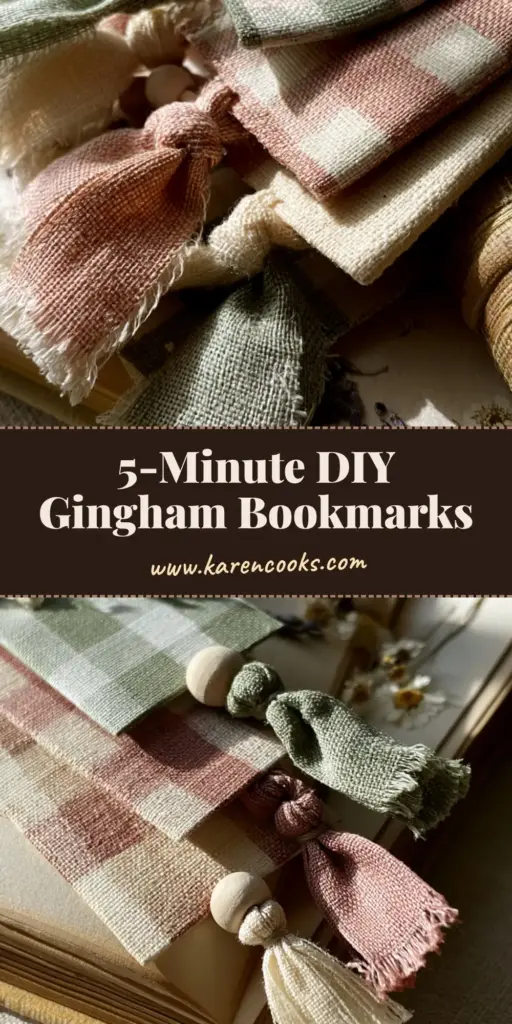
Gingham Bookmarks: The Ultimate Artisanal Guide to Crafting Aesthetic Botanical Page-Markers
Ingredients
Equipment
Method
- Cut gingham cardstock into 2x7 inch (5x18cm) strips and glue to vintage paper backing using a bone folder to smooth.
- Fray the linen ribbon edges, thread raw wooden beads onto silk, and knot into a tassel through the punched top hole.
- Artfully place dried daisies and lavender buds onto the cardstock base using precision tweezers and adhesive.
- Apply a matte finish sealant spray to lock the botanicals in place and provide a professional, non-reflective texture.
Notes
Seal in a well-ventilated area for the best matte result.
Celebrate the Joy of Tactile Reading
These gingham bookmarks are more than just a craft project; they are a celebration of the slow, intentional life. By combining the heavy-weight texture of quality paper with the fleeting beauty of dried daisies, you create a functional piece of art that makes every chapter feel special. Whether you are marking a spot in a vintage classic or gifting a set to a fellow book lover, these bookmarks are sure to be cherished.
Did you try this aesthetic craft? We’d love to see your versions of the sage green or dusty rose patterns! Share your photos and tag us, or pin this guide to your favorite hobby boards on Pinterest for later inspiration.