The landscape of modern mixology has shifted, proving that you do not need spirits to create a spiritual experience in a glass. These non-alcoholic cocktails are designed for the discerning palate, offering a complex, bitter-meets-sweet profile that rivals any traditional aperitif. Inspired by the golden-hour glow of a Mediterranean sunset, this recipe focuses on textural elegance and botanical depth.
Gone are the days of sugary “mocktails” that feel like an afterthought at the kid’s table. By utilizing an amber non-alcoholic aperitif and a sparkling botanical tonic, we create a drink that is both visually stunning and intellectually satisfying. Every element, from the effervescent bubbles to the sharp snap of pink peppercorns, is calculated to provide a sensory journey that lingers long after the glass is empty.
Whether you are hosting a formal dinner or looking for a refined way to unwind, these non-alcoholic cocktails bridge the gap between wellness and indulgence. The use of ribbed crystal and artisanal ice isn’t just for show; it’s about maintaining the integrity of the temperature and carbonation, ensuring every sip is as crisp as the first. This is a drink designed to be photographed, savored, and repeated.
The Sensory Architecture of a High-End Botanical Spritz
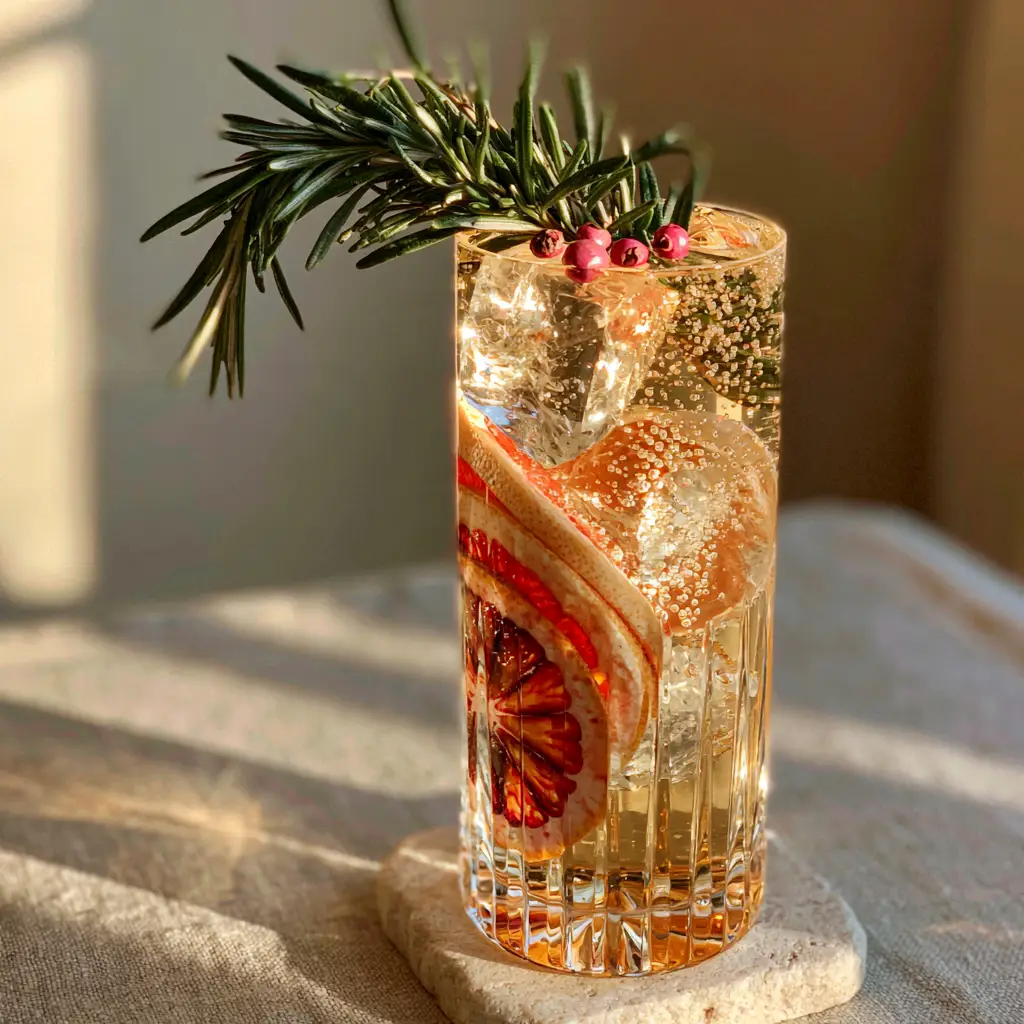
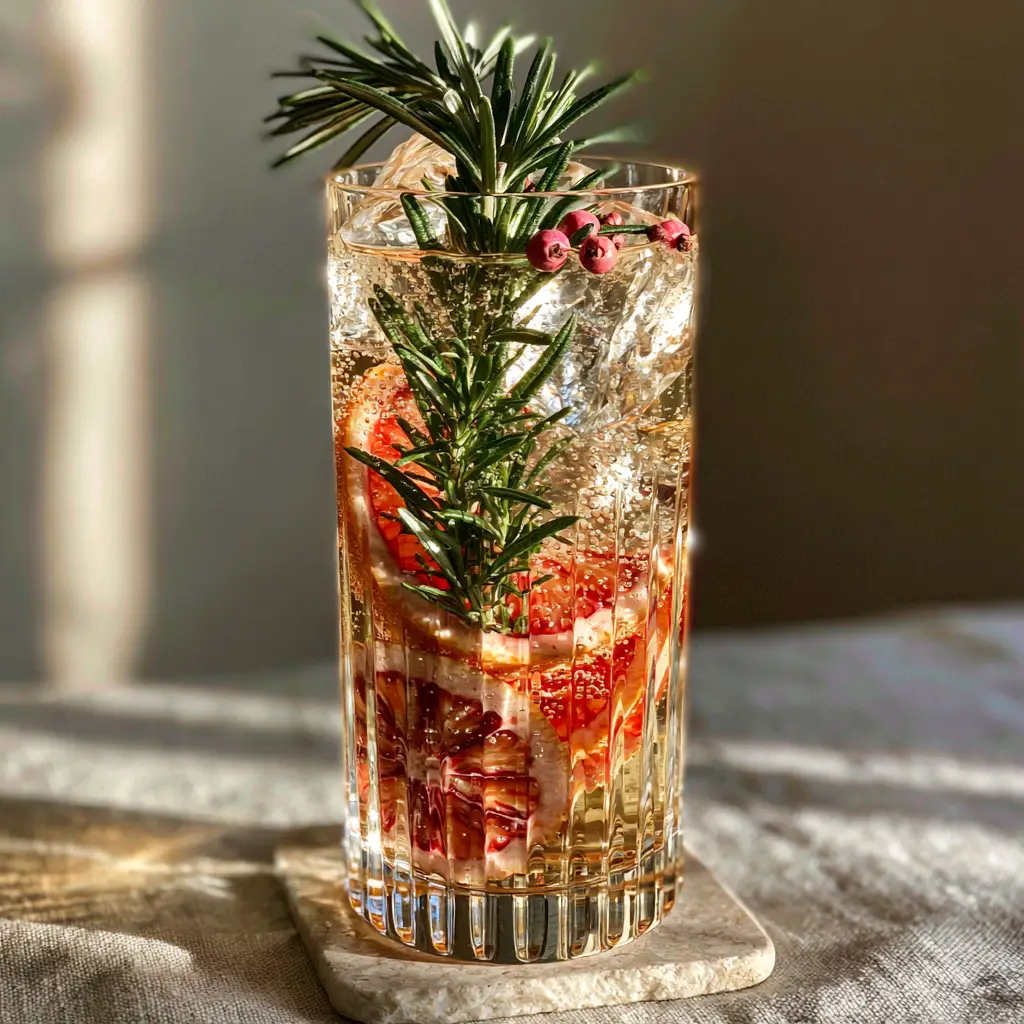
- Visually Translucent & Radiant: The pale, golden-amber base catches the light through the ribbed crystal, creating a prismatic effect that feels inherently celebratory.
- Layered Citrus Precision: Sliced blood orange and grapefruit wheels are tucked tightly against the glass, providing a vibrant, vertical mosaic of color.
- Aromatic Complexity: A large sprig of fresh green rosemary releases forest-like oils, while whole pink peppercorns add a subtle, floral heat to the nose.
- Textural Effervescence: Tiny, persistent bubbles from the sparkling botanical tonic create a dancing mouthfeel that lifts the heavier notes of the aperitif.
- Artisanal Temperature Control: Large, crystal-clear ice cubes provide a slow melt-rate, preventing your drink from becoming diluted while keeping it bracingly cold.
Hand-Selected Components for the Ultimate Non-Alcoholic Cocktails
Amber Non-Alcoholic Aperitif: 2 oz (60ml). This is the heart of the drink, providing the foundational bitterness and herbal depth. Look for an aperitif that features notes of gentian root, orange peel, and warm spices to achieve that signature golden glow.
Sparkling Botanical Tonic: 4 oz (120ml). Unlike standard tonic water, a botanical version contains extracts of flowers and herbs. This adds a layer of “invisible” flavor that complements the amber base and keeps the drink refreshing.
Blood Orange & Grapefruit Wheels: 2-3 thin slices each. These are not just garnishes; they provide essential acidity. The oils in the rinds are released as they sit against the ice, subtly flavoring the liquid throughout the drinking experience.
Whole Pink Peppercorns: 1 tsp (approx. 10-12 berries). These offer a unique, resinous sweetness and a beautiful visual contrast. They don’t provide the “burn” of black pepper, but rather a delicate floral spice.
Fresh Rosemary Sprig: 1 large stem. Rosemary acts as the “bridge” between the citrus and the herbal aperitif. A quick slap of the herb before placing it in the glass activates the volatile oils for maximum aroma.
Artisanal Clear Ice: 2 large cubes (approx. 2-inch/5cm). High-density ice is essential for a professional finish. Clear ice lacks the trapped air of standard cubes, meaning it won’t crack or melt rapidly, preserving the cocktail’s balance.
Essential Tools for Professional Drink Presentation
To achieve the look of these high-end non-alcoholic cocktails, you will need a ribbed crystal highball glass. The vertical ridges are not merely decorative; they catch the natural sunlight and highlight the effervescence of the tonic. A sharp mandoline is also highly recommended to ensure the citrus wheels are paper-thin, allowing them to adhere perfectly to the inner walls of the glass.
A long-handled bar spoon is necessary for a gentle “lift” rather than a vigorous stir. This ensures the aperitif and tonic are integrated without knocking out the carbonation. Finally, a pair of cocktail tweezers will help you place the peppercorns and citrus wheels with surgical precision, ensuring the “layered” visual effect described in our blueprint.
Mastering the Pour: A Step-by-Step Culinary Guide
The Foundation: Preparing the Citrus Architecture
Start by slicing your blood orange and grapefruit into translucent wheels using a mandoline or a very sharp chef’s knife. You want them thin enough to be flexible but sturdy enough to hold their shape. Press the slices firmly against the dry, inner walls of the ribbed crystal glass. The natural moisture of the fruit will create a temporary seal, allowing them to stay in place as you add the ice.
The Structure: Adding Artisanal Ice
Carefully drop two large, clear ice cubes into the glass. Use your bar spoon to guide them so they don’t dislodge your citrus wheels. The ice should feel heavy and solid. This is the secret to hydrating drink recipes that maintain their flavor profile from start to finish. The ice should reach nearly to the top of the glass, providing a platform for the final garnishes.
The Infusion: Combining the Aperitif and Tonic
Measure 2 oz (60ml) of your amber non-alcoholic aperitif and pour it slowly over the ice. You will see the liquid pool at the bottom, creating a beautiful gradient. Next, tilt the glass slightly and pour the sparkling botanical tonic down the side. This prevents the bubbles from dissipating too quickly. You are looking for a gentle “marbling” effect where the amber base meets the clear tonic.
The Finishing Polish: Aromatics and Garnishes
Take your rosemary sprig and give it a firm “clap” between your palms; this wakes up the scent. Tuck it into the side of the glass so the top leaves sit just above the rim. Scatter the pink peppercorns over the surface. They should float amongst the effervescent bubbles, looking like tiny rubies. This level of detail is what separates a standard drink from truly elite non-alcoholic mocktails.
Expert Secrets for the Perfect Fizz
- Chill Your Glassware: Place your ribbed crystal glasses in the freezer for 10 minutes before building the drink. This prevents the ice from “shocking” and melting upon contact.
- The Gentle Lift: Instead of stirring, insert a bar spoon to the bottom and gently lift the ice once. This is enough to incorporate the dense aperitif into the lighter tonic without losing carbonation.
- Peppercorn Selection: Ensure your pink peppercorns are whole and vibrant. If they are shriveled or grey, they will lose their floral aromatic properties.
- Carbonation Matters: Always use a freshly opened bottle of tonic. Once the seal is broken, the CO2 begins to escape, and these non-alcoholic cocktails rely on that “effervescent” visual and mouthfeel.
Shelf Life and Make-Ahead Components
While the cocktail itself must be served immediately to enjoy the bubbles, you can prep your garnishes in advance. Sliced citrus wheels can be stored in a sealed container with a damp paper towel for up to 4 hours. However, do not add the ice or liquids until you are ready to serve, as the non-alcoholic cocktails will lose their structural integrity and crispness.
If you have leftover botanical tonic, it is best used within 24 hours. The amber aperitif, being non-alcoholic, should be refrigerated after opening and typically lasts 4-8 weeks. Always check the manufacturer’s label for specific storage requirements to ensure the botanicals remain bright and potent.
Elegant Pairings for Your Botanical Spritz
This drink’s bitter-orange and herbal profile makes it a fantastic companion to savory appetizers. Consider serving it alongside a platter of salty olives and Marcona almonds. The acidity of the grapefruit wheels cuts through rich fats beautifully, making it a great match for charcuterie or even salted caramel treats if you enjoy a sweet-and-savory contrast.
For a complete spread of alcohol-free options, you might also enjoy exploring our non-alcoholic sangria for a fruitier alternative. If you are hosting a party, these non-alcoholic cocktails pair wonderfully with light bites, allowing the complex botanicals to shine without being overwhelmed by heavy sauces.
Common Questions About Non-Alcoholic Aperitifs
You can, but regular ice contains trapped air which causes it to melt faster and crack. Clear ice is denser, melts slower, and provides a much more professional, high-end visual result.
The key is to slice the citrus very thin (ideally with a mandoline) and press them against the inside of a dry glass before adding ice. The natural moisture of the fruit creates a suction-like effect.
Yes, botanical tonic is infused with additional herbal and floral extracts (like rosemary, lemon thyme, or elderflower) which provides a more nuanced flavor profile specifically designed to pair with botanical spirits.
A non-alcoholic aperitif is a spirit-free beverage designed to mimic the bitter, herbal, and aromatic profile of traditional aperitifs like Campari or Aperol, often using botanicals like gentian, rhubarb, and citrus peel.
Pink peppercorns are not related to black pepper; they are dried berries that offer a floral, slightly sweet, and resinous aroma without intense heat, adding a complex ‘adult’ layer to non-alcoholic drinks.
The Sophisticated Amber Botanical Spritz Recipe Card
Non-Alcoholic Cocktails: The Sophisticated Amber Botanical Spritz
Ingredients
Equipment
Method
- Using a mandoline or sharp knife, slice the blood orange and grapefruit into thin, translucent wheels.
- Press the citrus wheels tightly against the inner walls of the ribbed crystal highball glass, alternating colors.
- Carefully place the large artisanal clear ice cubes into the center of the glass, ensuring they don't disturb the citrus.
- Pour the amber non-alcoholic aperitif over the ice, followed by the sparkling botanical tonic. The liquid should be a pale golden-amber with visible effervescent bubbles.
- Tuck a large rosemary sprig into the glass and scatter pink peppercorns on the surface. Serve immediately while cold and sparkling.
Notes
Slap the rosemary sprig before garnishing to release aromatic oils.
Embrace the Art of the Pour
Mastering non-alcoholic cocktails is about more than just removing the spirits; it is about celebrating the ingredients that remain. This amber botanical spritz is a testament to how texture, aroma, and visual presentation can elevate a simple drink into a culinary masterpiece. The combination of the ribbed crystal and the golden-hour light makes every glass feel like a special occasion.
If you enjoyed this recipe, please leave a comment below and let us know how your botanical spritz turned out! Don’t forget to share your creations on Pinterest and tag us. For more inspiration, check out our other sophisticated drink recipes and join our community of home mixologists dedicated to flavor without compromise.