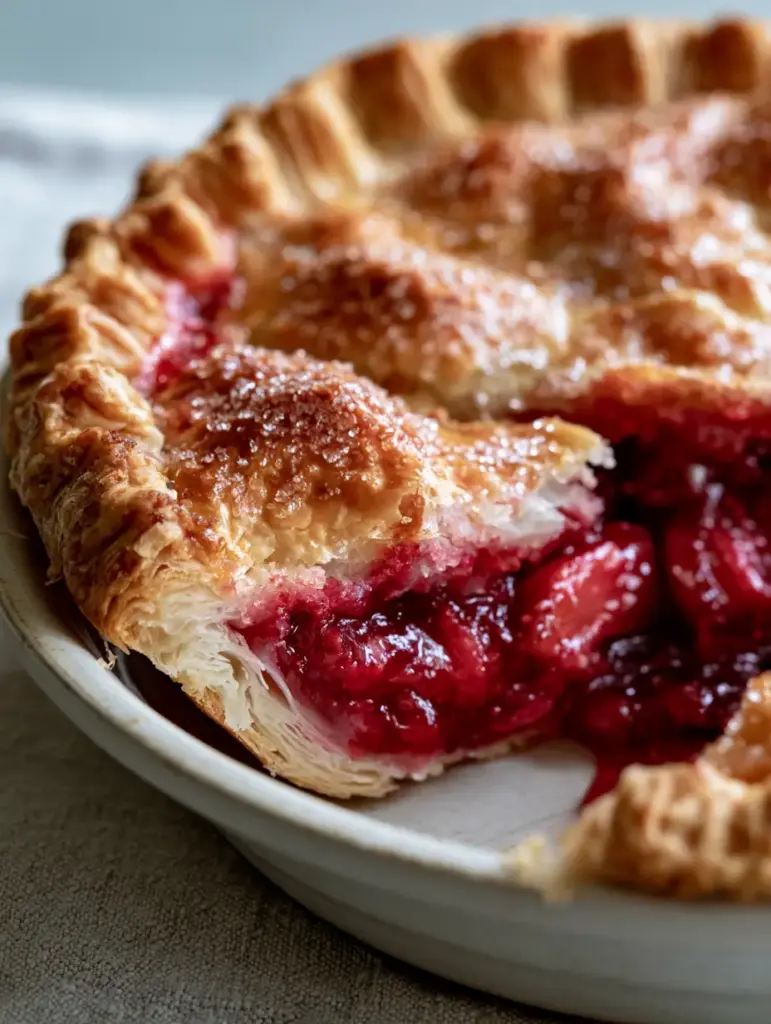
There is a specific, visceral magic found in the world of homemade pie recipes that simply cannot be replicated by store-bought alternatives. When you pull a ceramic dish from the oven and witness the bubbling, glossy deep red compote peeking through a golden-brown, sugar-dusted crust, you know you have achieved culinary excellence.
This particular recipe focuses on the intersection of rustic charm and professional pastry technique. We are moving beyond the standard “cut-in” method to embrace a simplified lamination process that produces paper-thin, buttery layers that shatter upon impact with a fork.
Whether you are a seasoned baker or just beginning to explore the vast landscape of easy pie recipes, this strawberry rhubarb masterpiece will be the crown jewel of your dessert repertoire. Let’s dive into the science of the perfect flake and the balance of tart and sweet.
Why This Laminated Crust Redefines Homemade Pie Recipes
- Defined Laminated Layers: Unlike standard crusts, this method creates visible, paper-thin sheets of buttery pastry that elevate the texture to patisserie standards.
- Structural Integrity: The combination of a high-fat European butter and a specific folding technique ensures the base remains crisp, never soggy, even under a heavy fruit filling.
- Glistening Visual Appeal: A generous dusting of coarse sugar crystals provides a sophisticated crunch and a professional, “bakery-case” finish.
- The Glossy Compote: We utilize a specific ratio of thickeners to ensure the strawberry and rhubarb juices transform into a thick, translucent, deep red glaze.
The Scientific Anatomy of Our Strawberry Rhubarb Filling
To achieve the visual and textural results described in our blueprint, every ingredient in this list serves a calculated purpose. We don’t just add sugar for sweetness; we add it to macerate the fruit and draw out the juices for thickening.
Fresh Rhubarb: You will need 3 cups (375g) of trimmed rhubarb stalks. Its high acidity provides the necessary “bite” to balance the sugar and the richness of the laminated dough.
Sweet Strawberries: 3 cups (450g) of hulled and halved strawberries. These provide the “deep red” hue and the essential natural pectin that contributes to a glossy finish.
Granulated Sugar: 1 cup (200g) of sugar. This is the primary sweetener that interacts with the fruit acids to create a syrupy consistency during the baking process.
Cornstarch (Thickening Agent): 1/4 cup (32g) of cornstarch. This is vital for achieving that “glossy, thick” appearance, as it clears beautifully when cooked, unlike flour which can leave a cloudy residue.
Orange Zest and Vanilla: 1 tbsp (6g) zest and 1 tsp (5ml) extract. These “invisible” ingredients enhance the floral notes of the berries and the earthiness of the rhubarb.
Unsalted European-Style Butter: 1 cup (227g) of chilled, high-fat butter. The higher fat content (82%+) is non-negotiable for creating the steam required for those paper-thin laminated layers.
All-Purpose Flour: 2.5 cups (312g) of flour. This provides the structural foundation; we use all-purpose to ensure the crust is tender rather than chewy.
Coarse Turbinado Sugar: 2 tbsp (25g) for the topping. These large crystals do not melt in the oven, providing the “glistening” effect seen in professional handheld smartphone photos.
Essential Gear for Professional Pie Baking
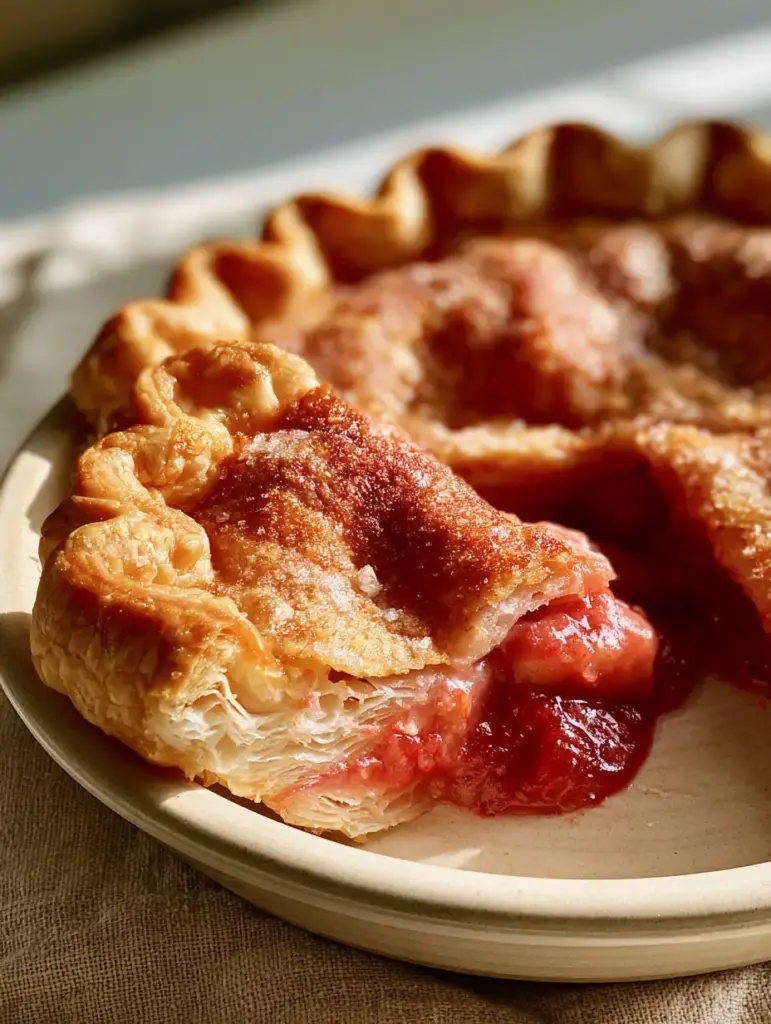
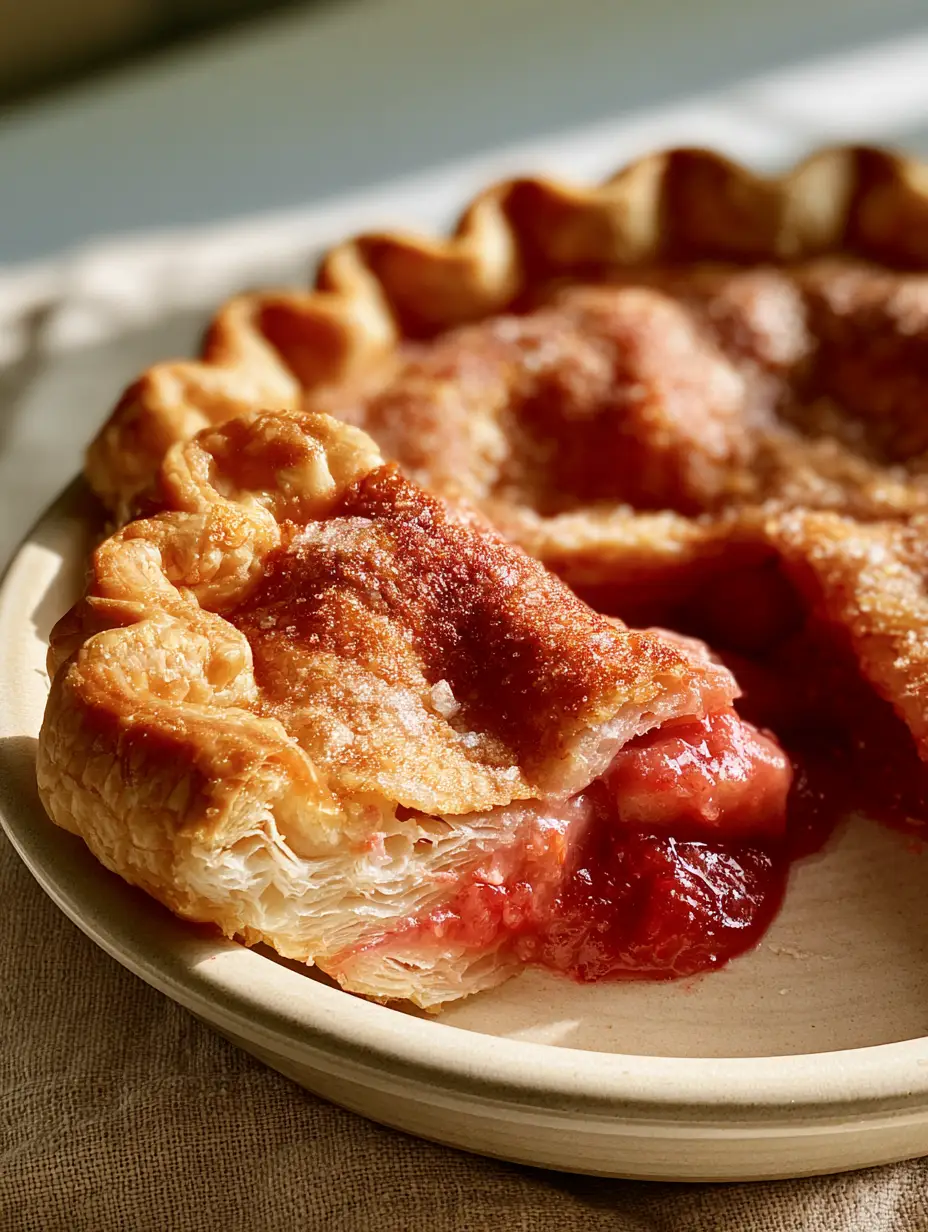
To achieve the clean slice and beautifully sculpted crimped edge seen in our visual guide, the right tools are essential. Using a light ceramic pie dish is highly recommended as it distributes heat evenly and prevents the edges from over-browning before the center is set.
A French rolling pin allows for better control over the pressure applied during the lamination folds. You will also need a pastry brush for the egg wash and a sharp bench scraper to handle the cold butter dough without warming it with your hands.
If you enjoy the process of building complex textures, you might also find inspiration in our peach raspberry pie or even a decadent chocolate pie recipe for your next baking project.
Mastering the Art of Flaky Lamination: Step-by-Step
Phase 1: Preparing the Laminated Dough Base
Start by whisking your flour and a pinch of salt in a large bowl. Cut your chilled butter into 1/2-inch (1.25cm) cubes and toss them into the flour, pressing each cube into a flat shingle between your thumb and forefinger.
Add 1/2 cup (120ml) of ice-cold water mixed with 1 tsp (5ml) of apple cider vinegar. Stir until a shaggy dough forms, then turn it out onto a floured surface.
Roll the dough into a rectangle, fold it into thirds like a letter, and rotate 90 degrees. Repeat this folding process three times; this is the secret to the “paper-thin buttery laminated layers” that define elite pie recipes.
Phase 2: Crafting the Deep Red Filling
In a large mixing bowl, toss your rhubarb and strawberries with the sugar, cornstarch, and aromatics. Let this mixture sit for at least 20 minutes.
During this time, you will see the fruit begin to release its juices. This maceration process is what ensures the filling becomes a “glossy, thick compote” rather than a watery mess inside the oven.
Phase 3: Assembly and Sculpting the Crimp
Roll out the bottom crust and fit it into your ceramic dish. Fill it with the fruit mixture, ensuring you scrape in all the sugary liquid from the bottom of the bowl.
Top with the second layer of dough, trim the excess, and tuck the edges under. Use your knuckles to create a “beautifully sculpted” crimped edge, pressing firmly to seal the juices inside.
Brush the entire surface with an egg wash (one egg beaten with a splash of milk) and sprinkle generously with the coarse sugar crystals. This creates that “lightly glistening” finish once baked.
Expert Secrets for No-Soggy-Bottom Success
- Chill is King: If the dough feels warm at any point during the lamination, put it in the freezer for 10 minutes. Cold butter equals steam; steam equals layers.
- Ventilate Properly: Cut at least four generous slits in the top crust. This allows steam to escape, which thickens the filling and prevents the crust from becoming soggy from the inside out.
- The Bake Temperature: Start the oven at 425°F (218°C) for the first 15 minutes to “shock” the butter into rising, then lower it to 375°F (190°C) to cook the fruit through.
- Patience is an Ingredient: You must let the pie cool for at least 4 hours. This allows the cornstarch to fully set, resulting in the “cleanly lifted” slice shown in the photos.
What to Serve With This Strawberry Rhubarb Delight
A warm slice of pie is traditional, but pairing it with complementary textures can elevate the experience. A dollop of unsweetened whipped cream or a scoop of vanilla bean ice cream is classic.
For those hosting a larger dessert spread, consider adding apple pie cupcakes for a different take on the flavor profile. If you have leftover pastry scraps, you can even make mini chocolate cream pie bites as a kitchen snack.
If you’re serving this as part of a brunch, it pairs beautifully with high-quality coffee. Explore our nespresso coffee recipes to find the perfect brew to cut through the richness of the butter crust.
Frequently Asked Questions Regarding Pie Recipes
Yes, you can use frozen fruit, but do not thaw it first. Toss the frozen fruit directly with the sugar and cornstarch, and increase the baking time by 10-15 minutes to account for the extra moisture and cold temperature.
To prevent a soggy bottom, use a ceramic dish for even heat distribution, macerate the fruit to release juices before baking, and ensure your oven is fully preheated to a high temperature (425°F) for the initial stage of baking.
The pie is best served the day it is made for maximum crunch. However, it can be stored at room temperature for up to 2 days or refrigerated for up to 5 days. Reheat in a 350°F oven to crisp the crust.
Lamination involves folding the dough over itself multiple times to create alternating layers of butter and flour. When baked, the water in the butter turns to steam, lifting those specific layers into paper-thin, distinct sheets.
Cornstarch is preferred for fruit pies because it results in a ‘glossy, thick’ finish that is translucent. Flour can make the filling appear cloudy and often requires a longer cook time to remove the raw flour taste.
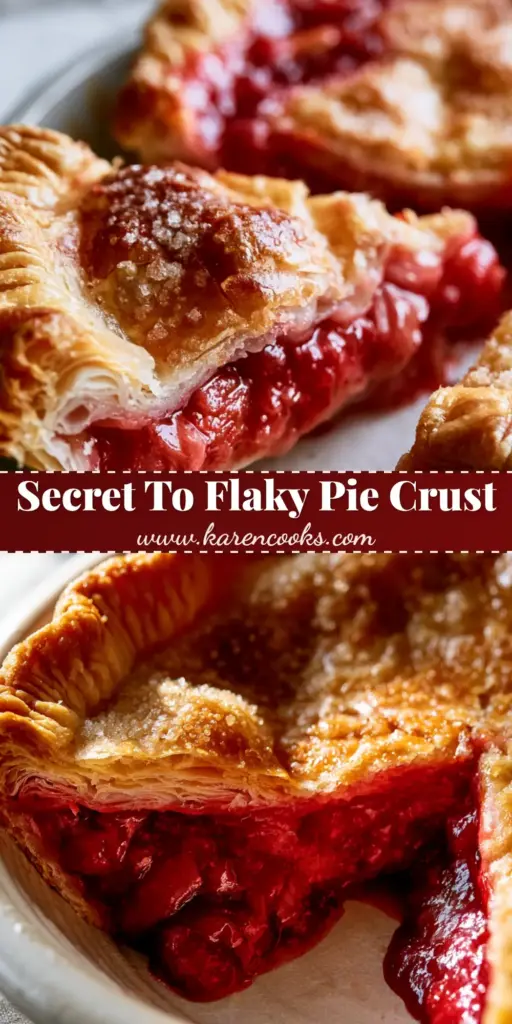
The Final Result: A Masterclass in Fruit Pie
Pie Recipes: The Ultimate Strawberry Rhubarb with Laminated Crust
Ingredients
Equipment
Method
- Press chilled butter cubes into flour shingles. Add ice water and vinegar, then fold the dough into thirds three times to create paper-thin layers.
- Wrap the dough and chill for at least 1 hour before rolling.
- Fill the bottom crust with macerated fruit. Top with the second crust, crimp the edges, and brush with egg wash and coarse sugar.
- Bake at 425°F (218°C) for 15 mins, then 375°F (190°C) for 35-40 mins until filling is glossy and bubbling.
Notes
Let the pie cool completely for 4 hours to ensure a clean slice.
Closing & Call to Action
Mastering the art of lamination within your own pie recipes is a journey that pays dividends in every buttery, flaky bite. The contrast between the tart rhubarb and the sugar-crusted pastry is a sensory experience that defines summer baking.
If you found these visual cues and techniques helpful, please leave a comment below and let me know how your lamination turned out! Don’t forget to save this recipe to your favorite boards on Pinterest so you can find it every strawberry season.