Mastering the perfect cheesecake recipe is often considered a rite of passage for the serious home baker. There is something profoundly satisfying about a tall, majestic slice of New York-style cheesecake standing upright on a ceramic plate, boasting a perfectly smooth, ivory-white surface. This is not just a dessert; it is a culinary architecture of balance between a buttery, golden-brown foundation and a rich, velvety interior.
If you have ever been disappointed by a cracked surface or a grainy texture, you are in the right place. Achieving that pristine, blemish-free top and the dense, clean-cut edges seen in professional patisseries requires more than just mixing ingredients. It requires an understanding of temperature, emulsification, and the forensic details of the bake itself.
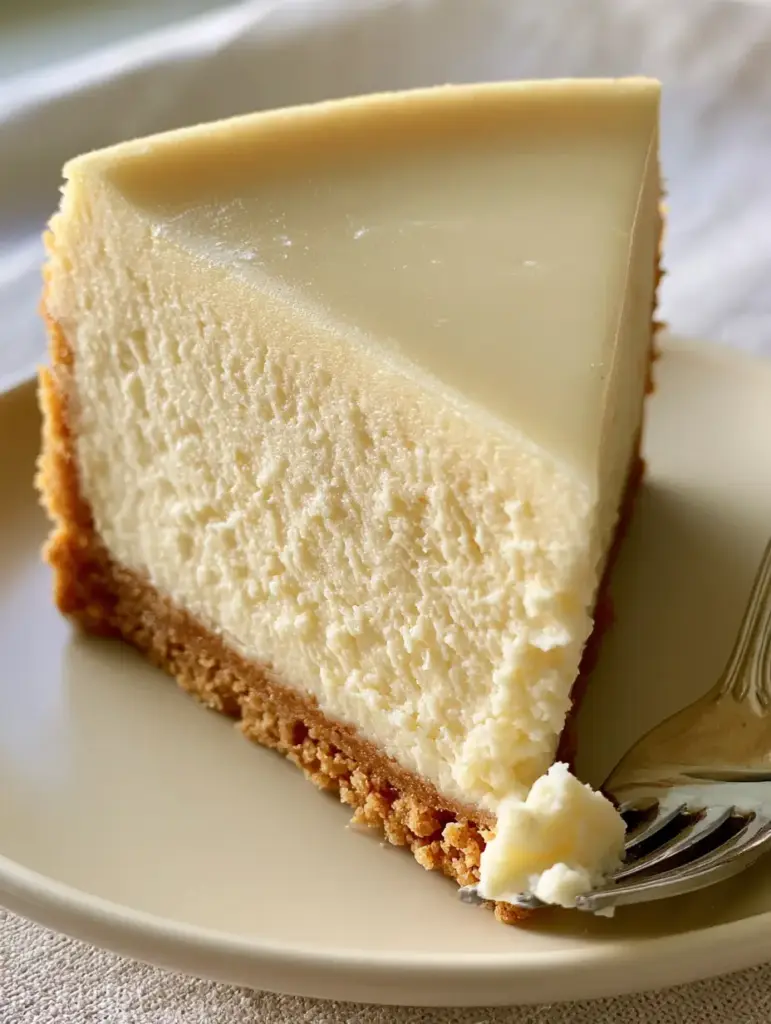
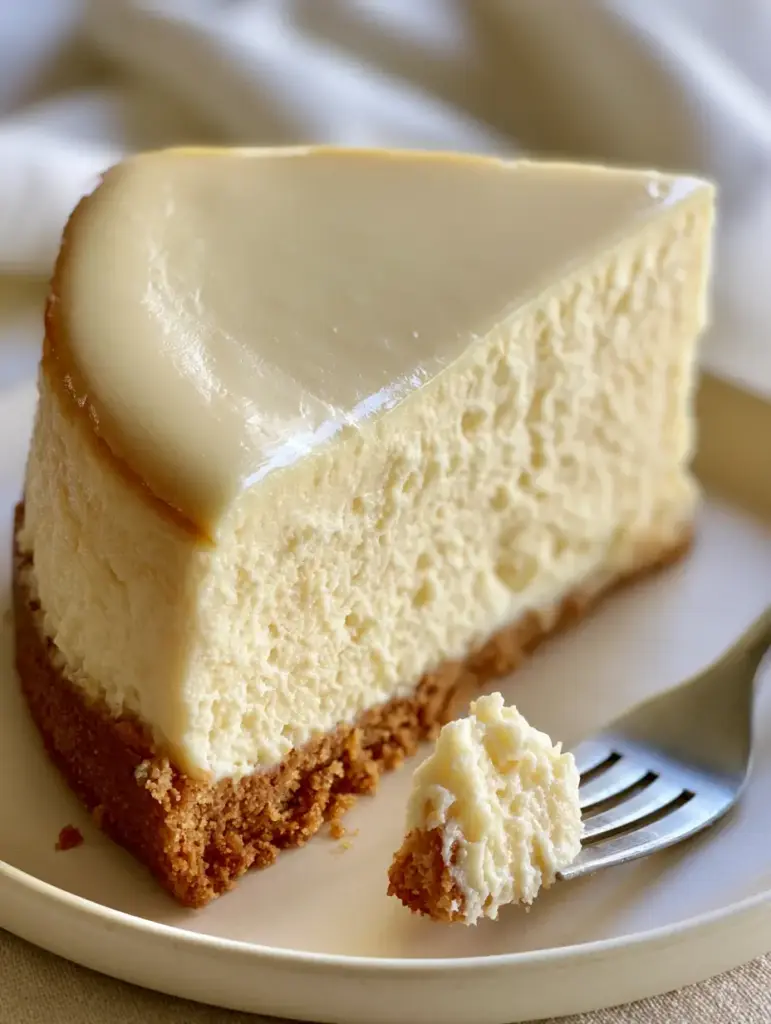
In this guide, we will walk through the exact steps to recreate the iconic visual from our blueprint: a thick, tightly packed graham cracker crust and a filling so smooth it yields like silk to a silver dessert fork. Get ready to elevate your dessert game to a professional standard.
Why This Cheesecake Recipe Stands Above the Rest
- The Foundation: A remarkably thick, buttery graham cracker crust that provides a crunchy, golden-brown contrast to the creamy filling.
- The Texture: A dense, ultra-velvety New York-style crumb that is achieved through specific room-temperature emulsification techniques.
- The Visual: A flawless, ivory-white surface completely free of cracks, bubbles, or brown spots, looking exactly like a handheld smartphone photo from a high-end bistro.
- The Clean Cut: Instructions on how to achieve those razor-sharp, clean-cut slice edges that make every serving look like a work of art.
The Secret Pillars of a Velvet Cheesecake Filling
To achieve the specific ivory-white aesthetic and dense texture described in our visual prompt, every ingredient must serve a structural purpose. We are moving beyond the light and airy “no-bake” varieties to create a substantial, professional-grade New York slice.
Full-Fat Brick Cream Cheese: You will need 32 oz (900g) of high-quality cream cheese. Ensure it is the brick variety, as the spreadable tubs contain too much moisture for a dense cheesecake recipe.
Granulated Sugar: 1 1/4 cups (250g) of sugar provides sweetness and helps break down the cream cheese proteins during the creaming process for a smoother finish.
Sour Cream: 1 cup (240ml) of full-fat sour cream is the secret to that “velvety and uniform texture.” It adds a subtle tang and softens the protein structure of the cheese.
Pure Vanilla Extract: 1 tbsp (15ml) adds the essential aromatic depth that elevates the ivory-white filling from plain to gourmet.
Large Eggs: 4 room-temperature eggs act as the binder. We add them last to prevent over-incorporating air, which is the leading cause of surface cracks.
Cornstarch: 2 tbsp (16g) provides insurance. It bonds with the egg proteins to prevent them from over-coagulating, ensuring the filling remains smooth and dense rather than rubbery.
Engineering the Perfect Golden-Brown Crust
Our visual blueprint calls for a “thick graham cracker crust, golden-brown and buttery.” To achieve this, we use a higher ratio of crumbs to butter than most standard recipes, ensuring the base can support the weight of the tall filling.
Graham Cracker Crumbs: 2 cups (200g) of finely ground crumbs. If you are adventurous, you can even use crushed brownie edges for a darker base, but for the classic look, stick to honey grahams.
Unsalted Butter: 1/2 cup (113g) of melted butter. This acts as the glue that transforms loose crumbs into a “tightly packed” foundation that won’t crumble when sliced.
Granulated Sugar: 1/4 cup (50g) helps the crust caramelize in the oven, giving it that distinct golden-brown hue and a slight snap.
Salt: A pinch of fine sea salt balances the sweetness of the honey grahams and enhances the buttery flavor profile.
Essential Equipment for a Blemish-Free Bake
To achieve the “perfectly smooth, pale ivory top surface” seen in the macro shot, your equipment is just as important as your ingredients. A standard cake pan will not suffice for this tall, New York-style slice.
First, you need a 9-inch (23cm) springform pan. This allows you to remove the sides without disturbing the delicate edges of the cheesecake. To ensure a clean release, we recommend lining the bottom with parchment paper.
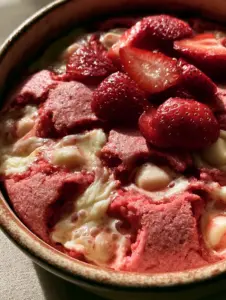
Second, heavy-duty aluminum foil is required to waterproof the pan. Since we are using a water bath (bain-marie) to maintain a gentle heat, the foil prevents water from seeping into your golden-brown crust. If you prefer a different profile, you might enjoy a fruit-topped version, but for this classic ivory look, the water bath is non-negotiable.
Step-By-Step: Constructing the Masterpiece
1. Preparing the Thick Graham Cracker Foundation
Preheat your oven to 350°F (175°C). In a medium bowl, combine the graham cracker crumbs, sugar, and melted butter. Stir until the mixture resembles wet sand.
Press the mixture firmly into the bottom of your springform pan. Use the flat bottom of a measuring cup to ensure it is “tightly packed” and level. Bake for 10 minutes until it smells nutty and looks golden-brown, then set aside to cool completely.
2. Emulsifying the Creamy Filling
Lower the oven temperature to 325°F (160°C). In a large bowl or stand mixer fitted with the paddle attachment, beat the cream cheese and sugar on medium-low speed. The goal is to remove all lumps without whipping in excess air.
Add the sour cream, vanilla, and cornstarch. Continue mixing on low until the texture is uniform and silky. You are looking for a “rich, velvety” consistency before the eggs are even introduced.
3. Incorporating the Eggs for Structure
Add the eggs one at a time, mixing just until the yellow disappears. Over-mixing at this stage creates air bubbles that will rise and pop during baking, ruining the “smooth ivory-white surface” we are aiming for.
Pour the filling over the cooled crust. Use an offset spatula to smooth the top so it is perfectly level. Tap the pan firmly on the counter 5-10 times to force any trapped air bubbles to the surface.
4. The Bain-Marie (Water Bath) Technique
Wrap the outside of the springform pan in three layers of heavy-duty foil. Place the pan inside a larger roasting pan and fill the roasting pan with boiling water until it reaches halfway up the sides of the cheesecake pan.
Bake for 75-90 minutes. The cheesecake is done when the edges are set but the center still has a slight, uniform jiggle like Jello. The top should remain pale ivory, not browned.
The Critical Cooling and Chilling Phase
Cracks happen during rapid temperature changes. Once the bake is finished, turn off the oven and crack the door open about an inch. Let the cheesecake sit in the cooling oven for one hour.
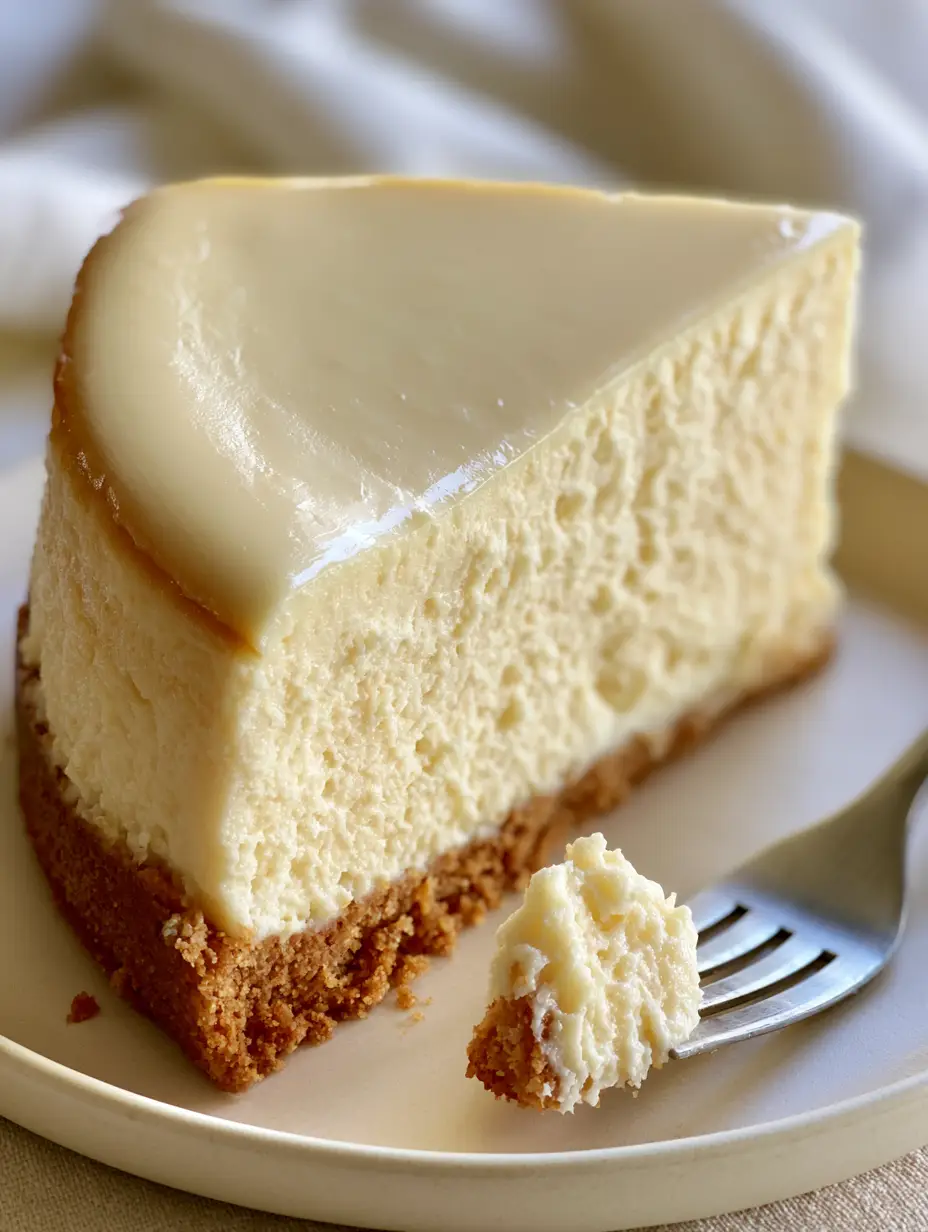
After the hour, remove it from the water bath and let it reach room temperature on the counter. Finally, refrigerate the cheesecake for at least 12 hours (preferably 24). This long chill is what creates the “clean-cut slice edges” and the “dense cream cheese filling” shown in the blueprint.
“Patience is the most important ingredient in a cheesecake recipe. The molecular structure needs time to set for that perfect macro-shot texture.”
Expert Tips for a Flawless Presentation
- Room Temperature is Key: Ensure your cream cheese, eggs, and sour cream are at room temperature for at least 2 hours before mixing to prevent lumps.
- The Hot Knife Trick: To get the “clean-cut edges” seen in the silver fork visual, dip a sharp chef’s knife in boiling water and wipe it dry between every single cut.
- Avoid Over-Baking: If the top starts to brown, your oven is too hot or the cheesecake has been in too long. It should be ivory, not tan.
- The Foil Shield: If you are worried about the top, you can loosely tent the roasting pan with foil during the last 20 minutes of baking.
Creative Variations and Pairings
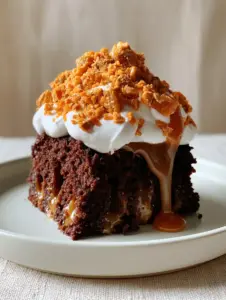
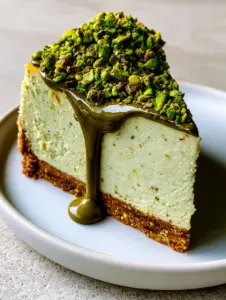
While this recipe focuses on the classic New York style, the dense base serves as a canvas for many other flavors. You could easily adapt this into a nutty pistachio version or a decadent caramel swirl by adding ribbons of sauce before baking.
For a more seasonal approach, consider serving a slice alongside a fresh compote, similar to what you might find in a blackberry-infused dessert. The acidity of fresh berries cuts through the richness of the dense cream cheese perfectly.
Frequently Asked Questions
While a springform pan is highly recommended for the classic tall look, you can use a deep cake pan lined with a parchment ‘sling’ to lift it out, though the edges may not be as pristine.
Chill the cheesecake for at least 12-24 hours to set the fats. When slicing, dip a sharp knife into hot water, wipe it clean, and make one firm cut. Repeat the cleaning and dipping process for every single slice.
The key is using a water bath (bain-marie) and ensuring you don’t over-mix the eggs, which incorporates excess air. Additionally, allowing the cheesecake to cool slowly in the oven with the door cracked prevents thermal shock.
Yes, sour cream adds moisture and a slight acidity that softens the dense cream cheese proteins, resulting in a more velvety mouthfeel compared to recipes using only cream cheese.
Cold cream cheese forms lumps that are impossible to smooth out once the liquid ingredients are added. Room temperature dairy emulsifies properly, creating the velvety texture seen in professional cheesecakes.
The Definitive New York Cheesecake Recipe Card
Cheesecake Recipe: The Ultimate Dense and Velvety New York Masterpiece
Ingredients
Equipment
Method
- Combine crumbs, butter, and sugar. Press firmly into the springform pan until tightly packed.
- Bake at 350°F (175°C) for 10 minutes until golden-brown. Cool completely.
- Beat cream cheese and sugar on medium-low until smooth. Add sour cream, vanilla, and cornstarch.
- Mix in eggs one at a time on low speed until just combined. Do not over-mix.
- Wrap pan in foil, place in a roasting pan with boiling water. Bake at 325°F (160°C) for 75-90 minutes.
- Turn off oven, crack door, and let sit for 1 hour. Chill in fridge for 12-24 hours before slicing with a hot knife.
Notes
Use a hot, wet knife for perfectly clean slices.
Perfecting Your Dessert Portfolio
Building a repertoire of high-end desserts takes practice, but this cheesecake is a cornerstone of any baker’s collection. Whether you are making this as a celebratory birthday treat or simply to master the art of the ivory-white surface, the results are always worth the wait.
Once you have mastered this, you might want to explore other textures, like the lighter profile of a traditional cream cheese pie. However, nothing quite compares to the weight and luxury of a true New York slice.
We would love to see your results! Did you manage to get that perfectly smooth top? Leave a comment below and share your baking journey with us. Don’t forget to save this recipe to your dessert boards on Pinterest for your next special occasion!