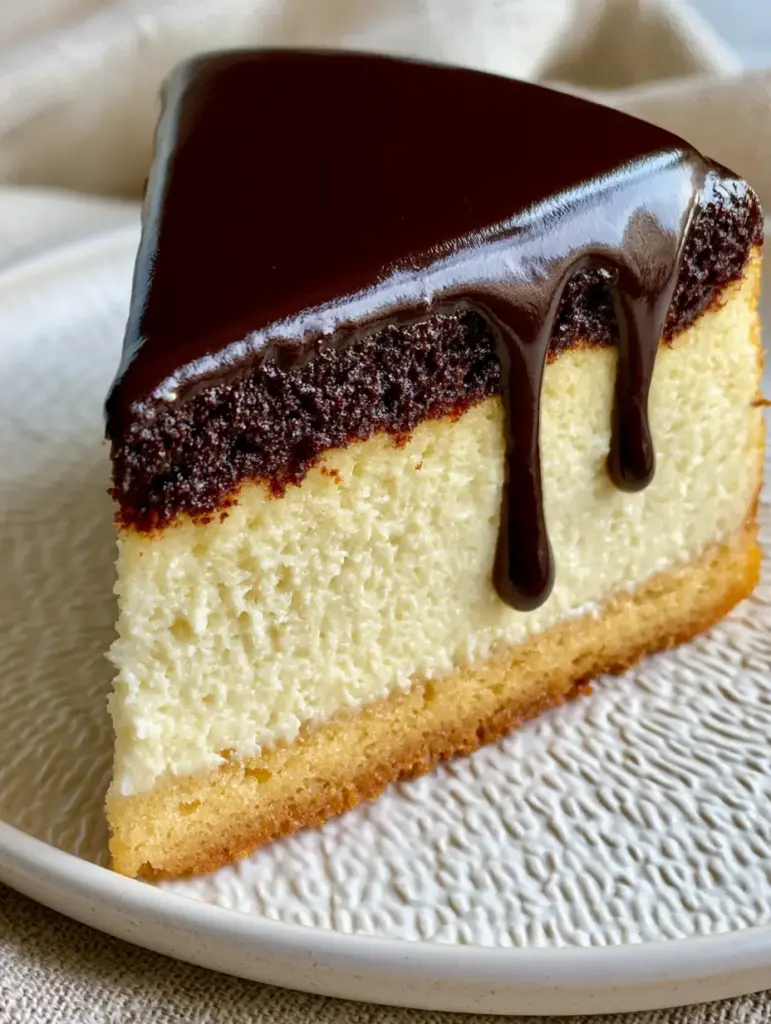
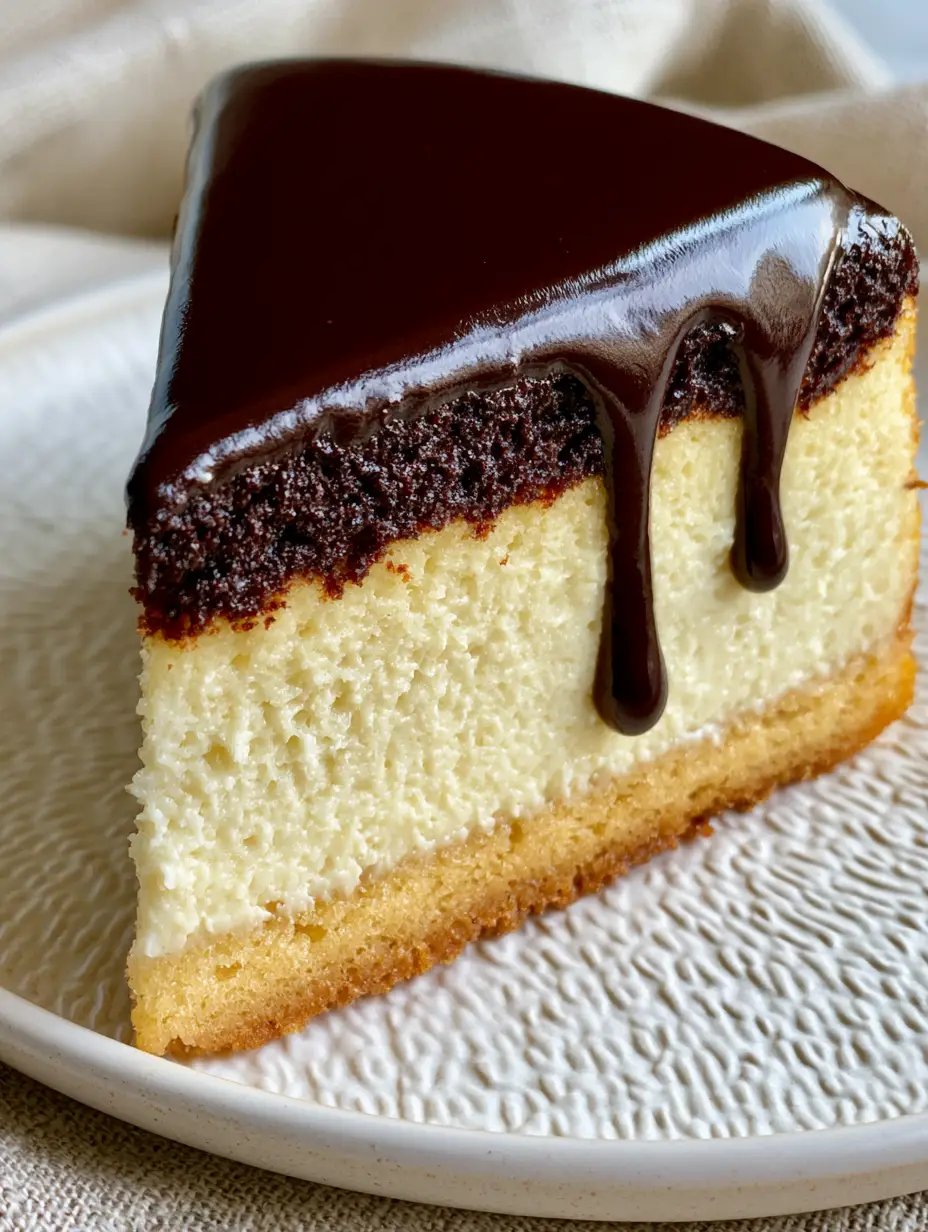
The Boston Cream Pie Cheesecake is the architectural masterpiece your dessert table has been waiting for. Combining the nostalgic comfort of a classic New England sponge with the decadent, silk-like texture of a premium New York-style cheesecake, this dessert is a study in culinary contrast. Every bite delivers a symphony of textures: the light airy crumb of the golden base, the dense richness of the vanilla custard middle, and the snap of a glossy dark chocolate ganache.
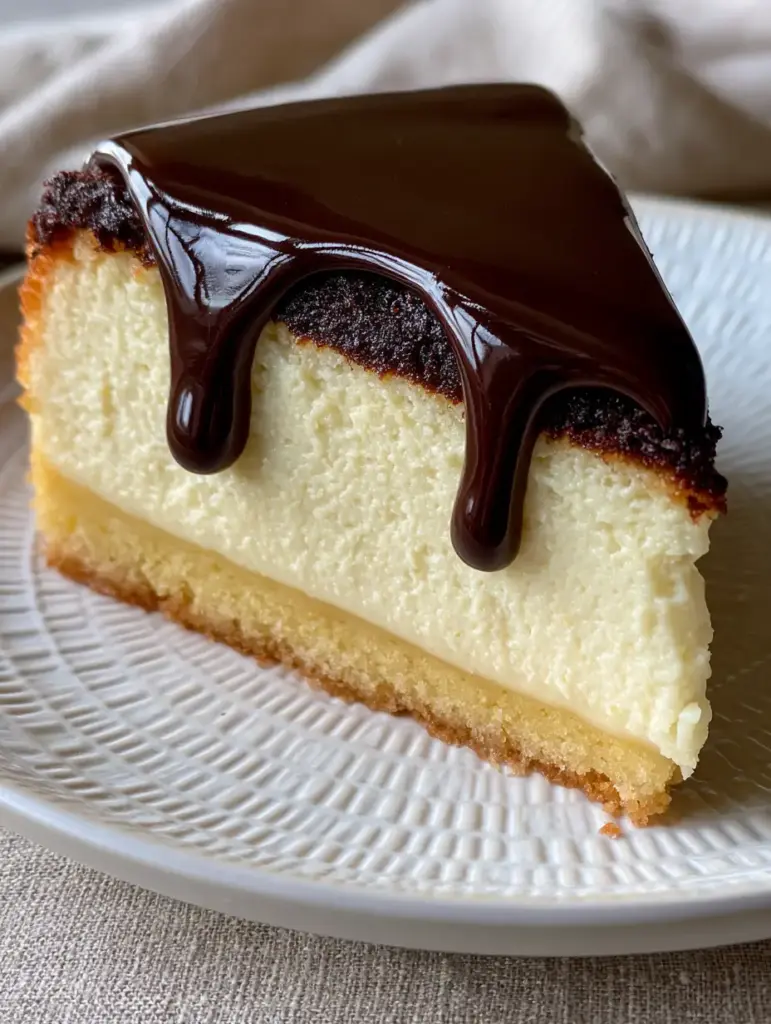
Inspired by the iconic handheld smartphone photography of modern pastry chefs, this recipe focuses on achieving three distinct, flawless layers. We aren’t just making a cake; we are engineering a visual and sensory experience. From the slow, syrupy chocolate drip to the pale ivory hue of the vanilla bean-speckled cheesecake, every element has been meticulously designed to match the perfect “bakery-window” aesthetic.
The Anatomy of a Perfect Hybrid Dessert
- The Golden Sponge Foundation: Unlike a standard graham cracker crust, this cheesecake sits atop a soft, buttery baked sponge cake that absorbs just enough moisture to stay tender without becoming soggy.
- Ivory Vanilla Bean Custard Layer: By incorporating extra egg yolks and real vanilla bean paste, we achieve a dense, custard-like cheesecake layer that mimics the traditional pastry cream of the original pie.
- Glossy Dark Chocolate Ganache: A high-fat cocoa ratio ensures a mirror-like finish that holds its shape while providing that signature slow-motion drip down the side of the slice.
- Structural Integrity: This recipe utilizes professional cooling techniques to ensure the cheesecake remains flat and crack-free, providing the perfect canvas for the chocolate topping.
Essential Elements for the Perfect Hybrid Slice
To achieve the result shown in our visual blueprint, you cannot cut corners with ingredients. Each component serves a specific scientific purpose in the final structure.
Cake Flour: 1.5 cups (188g). The lower protein content in cake flour is essential for the base layer, ensuring the sponge remains light enough to contrast the dense cheesecake without being tough.
Cream Cheese: 3 packages (675g). Use only full-fat, brick-style cream cheese. This provides the structural lipids necessary for that “pale ivory” dense texture that characterizes a classic cheesecake profile.
Heavy Whipping Cream: 1 cup (240ml). Divided between the cheesecake batter for silkiness and the ganache for that specific “glossy” finish and slow-drip viscosity.
Vanilla Bean Paste: 2 tsp (10ml). While extract works, the paste provides the visible black specks and deep aromatic profile required for a true “custard” experience.
Egg Yolks: 3 large yolks (in addition to whole eggs). These are the “invisible” ingredients that shift the cheesecake from a standard recipe to a rich, custard-flavored masterpiece.
Dark Chocolate (60% Cacao): 6 oz (170g). High-quality couverture chocolate ensures the topping isn’t just sweet, but provides a sophisticated bitter contrast to the vanilla layers.
Tools for Professional Confectionery Results
Achieving the clean edges seen on a modern textured white ceramic plate requires the right equipment. You will need a 9-inch (23cm) springform pan with a tight seal. A heavy-duty stand mixer is preferred to incorporate the cream cheese without aerating it too much—too many air bubbles will ruin the “dense” custard look.
Furthermore, a large roasting pan is required for a bain-marie (water bath). The steam protects the delicate proteins in the ivory custard layer, preventing the edges from browning and keeping the top perfectly flat for the ganache application.
Mastering the Three Pillars of Boston Cream Pie Cheesecake
Phase 1: The Golden Sponge Base
Preheat your oven to 325°F (165°C). Cream together 1/2 cup (115g) of butter and 3/4 cup (150g) of sugar until pale and voluminous. Fold in your sifted cake flour and a touch of baking powder. Spread this into the bottom of your greased springform pan.
Bake the sponge for only 12-15 minutes. It should be just set and a light golden-brown. Do not overbake, as it will continue to cook slightly during the cheesecake phase. This creates the “soft baked sponge cake base” described in our visual prompt.
Phase 2: The Vanilla Bean Custard Layer
Lower the oven to 300°F (150°C). Beat the cream cheese and remaining sugar on low speed. It is crucial to keep the speed low to maintain the “dense, pale ivory” appearance. Add the eggs and extra yolks one at a time, followed by the vanilla bean paste and a splash of heavy cream.
Pour the batter over the pre-baked sponge. Place the springform pan inside the roasting pan and fill the roasting pan with hot water halfway up the sides. Bake for 60-70 minutes. You are looking for a gentle jiggle in the center, like set gelatin, while the edges remain pale ivory.
Phase 3: The Cooling and Setting Ritual
Turn off the oven and crack the door open for one hour. This gradual temperature shift prevents the cheesecake from pulling away from the sponge or cracking. Afterward, chill in the refrigerator for at least 6 hours, though overnight is best for the cleanest slices.
Phase 4: The Glossy Dark Chocolate Drip
Heat 1/2 cup (120ml) of heavy cream until just simmering. Pour over 6 oz (170g) of finely chopped dark chocolate. Let it sit for 5 minutes, then whisk gently from the center outward until a glossy, dark emulsion forms. Add 1 tsp (5ml) of corn syrup for extra mirror-like shine.
Pour the ganache into the center of the chilled cheesecake. Use an offset spatula to push the chocolate toward the edges, allowing it to create that “slow chocolate drip” down the sides. The cold surface of the cheesecake will naturally slow the flow, giving you maximum control over the visual result.
Expert Tips for Bakery-Quality Success
- Room Temperature is Non-Negotiable: Ensure your cream cheese and eggs are at room temperature. Cold ingredients lead to lumps, which will ruin the “flawless three distinct layers” look.
- The Clean Cut: To get the clean edge shown in the smartphone photo, dip a sharp knife in hot water and wipe it dry between every single cut.
- Sponge Barrier: If you’re worried about the sponge getting too wet, you can sprinkle a thin layer of cake crumbs or even a tiny amount of melted white chocolate over the sponge before adding the cheesecake batter.
- Avoid Over-Mixing: Over-mixing the cheesecake layer incorporates air, which causes the cake to rise and then fall, creating an uneven surface for your ganache.
Optimal Storage and Serving Temperatures
This rich cheesecake is best served slightly chilled but not ice-cold. Take it out of the refrigerator 20-30 minutes before serving to let the ganache soften into a silky texture.
Store leftovers in an airtight container in the refrigerator for up to 5 days. You can also freeze individual slices. Wrap them tightly in plastic wrap and then foil; they will remain delicious for up to 3 months. To serve, thaw overnight in the fridge.
What to Serve with Your Boston Cream Masterpiece
This dessert is a powerhouse on its own, but it pairs beautifully with other creamy textures. If you are hosting a dessert party, consider serving it alongside a banana pudding pie or perhaps a lighter blackberry cheesecake to provide a fruit-forward contrast.
For a truly decadent spread, you could even offer a sampling of different “pie-inspired” cheesecakes, including a butterscotch pie variation or a rich brownie bottom cheesecake.
Troubleshooting Your Cheesecake Questions
Yes, but you will miss the visual ‘specks’ and the deep custard-like aroma that vanilla bean paste provides, which is central to the Boston Cream flavor profile.
Temperature control is vital. Ensure your cheesecake is thoroughly chilled and your ganache has cooled to a slightly thickened, lukewarm state before pouring.
Pre-baking the sponge until it forms a light crust is key. Additionally, cooling the cheesecake gradually prevents excess condensation from seeping into the cake layer.
This happens if the oven temperature is too high or if you didn’t use a water bath. The water bath keeps the temperature consistent and prevents the ivory custard from darkening.
A lack of gloss usually means the emulsion broke or there isn’t enough fat. Ensure you use high-quality chocolate and add a teaspoon of corn syrup or butter for a mirror-like finish.
The Final Boston Cream Pie Cheesecake Recipe
Boston Cream Pie Cheesecake: The Ultimate Three-Layer Showstopper
Ingredients
Equipment
Method
- Cream butter and sugar, add egg, then fold in flour. Spread in pan and bake at 325°F (165°C) for 12-15 minutes until light golden.
- Beat cream cheese and sugar on low. Add eggs, yolks, vanilla bean paste, and cream. Pour over sponge.
- Place pan in water bath. Bake at 300°F (150°C) for 60-70 minutes until edges are set but center jiggles slightly.
- Gradually cool in oven with door cracked for 1 hour, then refrigerate for at least 6 hours.
- Make ganache by pouring hot cream over chocolate. Pour over chilled cake, creating a slow drip effect.
Notes
A water bath is essential to prevent cracks and keep the cheesecake top perfectly flat.
Closing & Call to Action
Mastering the Boston Cream Pie Cheesecake is a rite of passage for any serious home baker. It challenges your ability to manage textures and temperatures, resulting in a dessert that is as visually stunning as it is delicious. The combination of the golden sponge and the glossy drip is a timeless classic reimagined for the modern palate.
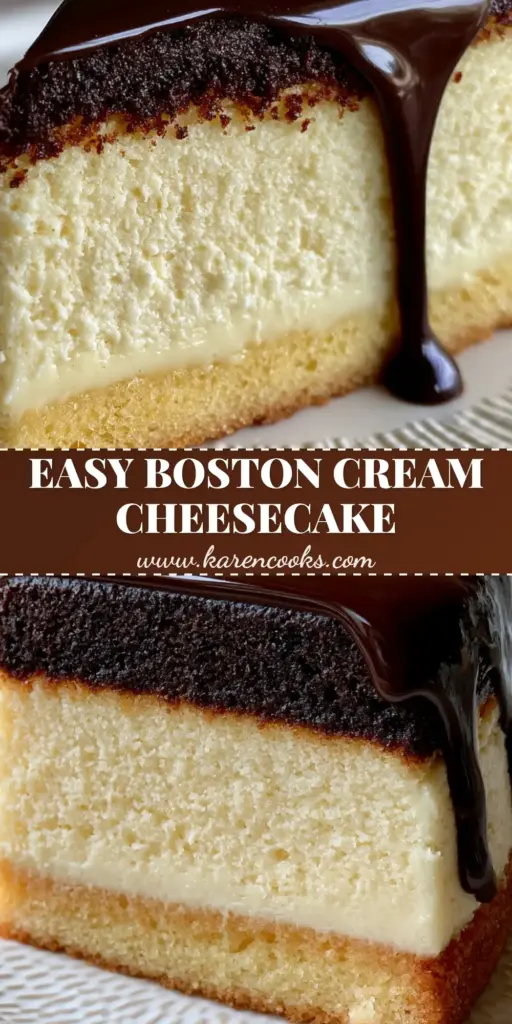
If you enjoyed this recipe, please leave a comment below and share your photos! You can also follow me on Pinterest for more elevated dessert inspiration and culinary deep-dives. Don’t forget to save this pin to your “Ultimate Desserts” board!